What wreaths and garland add
A roofline and a few wrapped trees describe the shape of a house. Wreaths and garland describe its welcome. They sit at eye level, near the door, where guests actually stop, and they bring texture, greenery and a hand-finished quality that lines of light cannot.
That is why a display with a lit wreath and a garland-framed door often feels more personal than one with the same number of lights and no greenery. It is also why designers treat the entry as the place where the display ends, and the place worth spending a little more on.
Where a wreath belongs
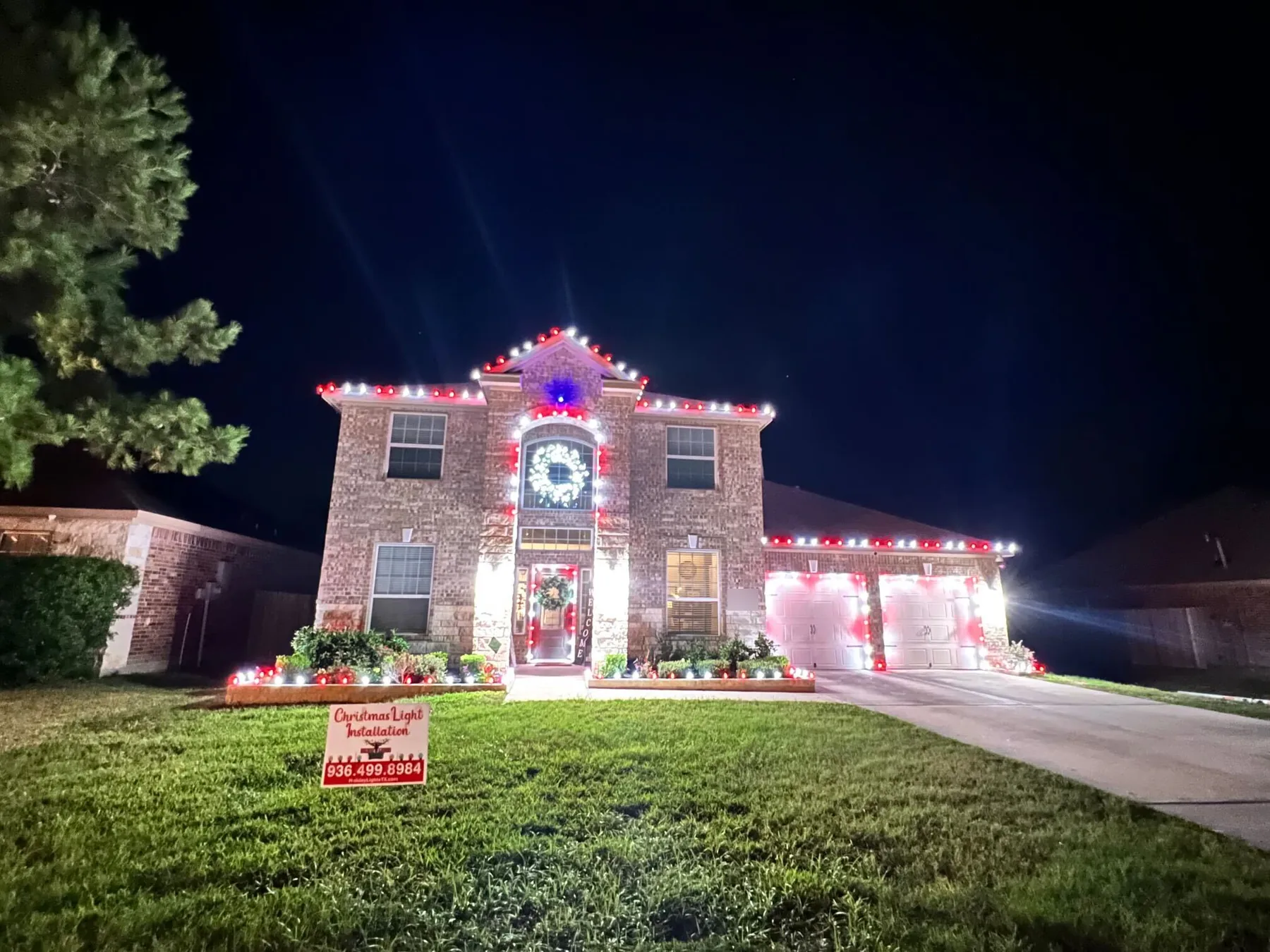
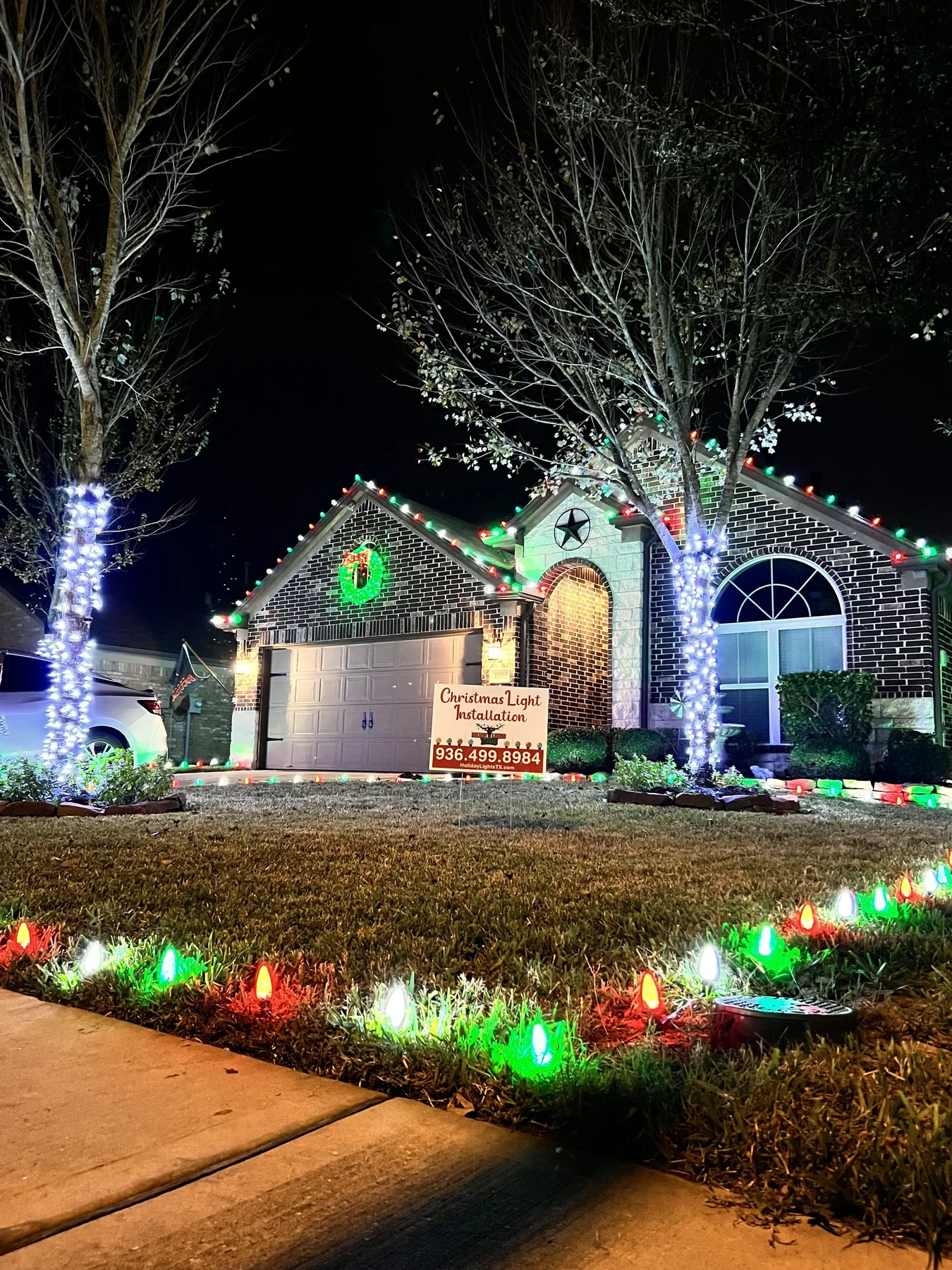
The front door is the obvious spot, and a single large wreath centered on the door is a classic. But wreaths also work on windows, on garage doors, on gates, on the front of a porch and above a pair of French doors. Repeating the same wreath across the front of the house in a row of matching windows creates rhythm that reads as formal and considered.
Scale matters. A wreath that is too small looks lost, and one that is too large crowds the door. As a rule of thumb, a door wreath should be noticeably narrower than the door but large enough to be seen from the street. For oversize doors or tall windows, go larger than you think, because distance shrinks everything.
Garland on rails, columns and doorways
Garland follows lines, which makes it ideal for porch railings, stair rails, columns and the frame of a door. Draped along a rail with lights woven through, it softens hard edges and gives the porch a finished look. Wrapped around a column, it adds height and ties the porch roof to the floor.
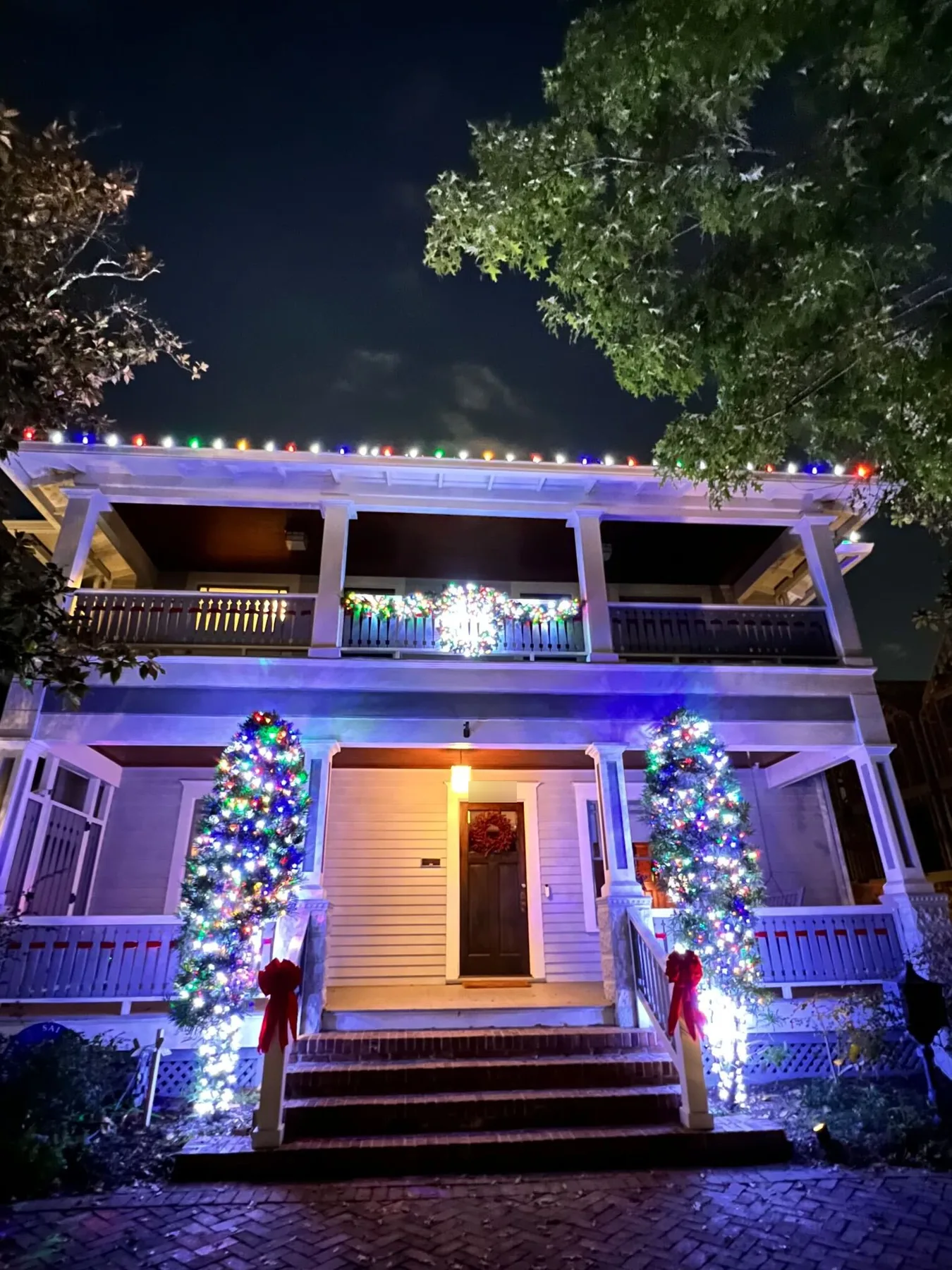
A framed doorway, with garland running up both sides and across the top, turns an ordinary entry into a feature. It is one of the highest-impact upgrades per dollar, since it concentrates the design where people look. Our gallery shows a craftsman porch dressed this way, with lit topiaries to either side.
Lighting the greenery
Greenery without light disappears at night. Weaving small lights through the garland and wreath gives them a glow that carries to the street, and it ties them to the rest of the display. Match the color to your roofline, and keep the lights small and closely spaced so they read as a sparkle through the greens instead of a string laid over them.
Warm white is the safest choice, since it flatters natural greenery. Multicolor works when the rest of the display is multicolor and the greenery is meant to be playful. Bows and ribbon can add a single accent color without complicating the scheme.
Artificial versus fresh in Texas
Fresh greenery looks and smells wonderful, but in a Texas autumn and early winter it can dry quickly, particularly on a sunny door or in a warm spell. Artificial greenery holds its shape through the season and through repeated years, and good-quality pieces look convincing from the street. For most outdoor displays, artificial is the practical choice.
If you love the feel of fresh greens, consider using them in protected spots, such as a covered porch, and plan to replace them partway through the season. Whichever you choose, the lighting should be rated for outdoor use and installed so that it can be removed without damaging the greenery.
Pairing with the rest of the display
The cleanest designs repeat a few elements. If the roofline is warm white, use warm white in the wreath and garland and let a single color, such as red, appear in bows. If the display is red and green, repeat the red in the ribbon and the green in the garland so that they read as part of one palette.
Avoid adding wreaths and garland to every surface. One wreath on the door and one on a key window, or garland on the porch rail and the door frame, is often enough. Let the greenery be a punctuation mark rather than the whole sentence. For help with the palette, see color schemes that work.
How we handle them
Our wreath and garland service is designed to fit with the rest of the installation. Pieces are measured to your doors and rails, lit to match your lights and installed so that they are secure and removable. The same principle applies as everywhere else in our program: the set is labelled, removed at the end of the season and stored with the rest of your display.
You can see the service in more detail on the wreaths and garland page, try the effect on your own house with the see your home in lights tool, and request a quote to add them to a design.
Sizing and proportion in detail
Proportion is the difference between a wreath that looks right and one that looks wrong. For a standard front door, a wreath that is about two-thirds the width of the door is a good starting point, and a larger wreath works on double doors or a door with sidelights. On tall windows, a vertical garland often looks better than a round wreath.
For garland, think in terms of drape. A gentle swag with consistent depth looks natural, while a tight, straight run looks stiff. On a long porch rail, a series of equal swags with a bow at each post creates a rhythm that reads as formal.
We measure the places where greenery will go before we fabricate, so the pieces fit the house instead of being adjusted on the day.
Bows, ribbons and accents
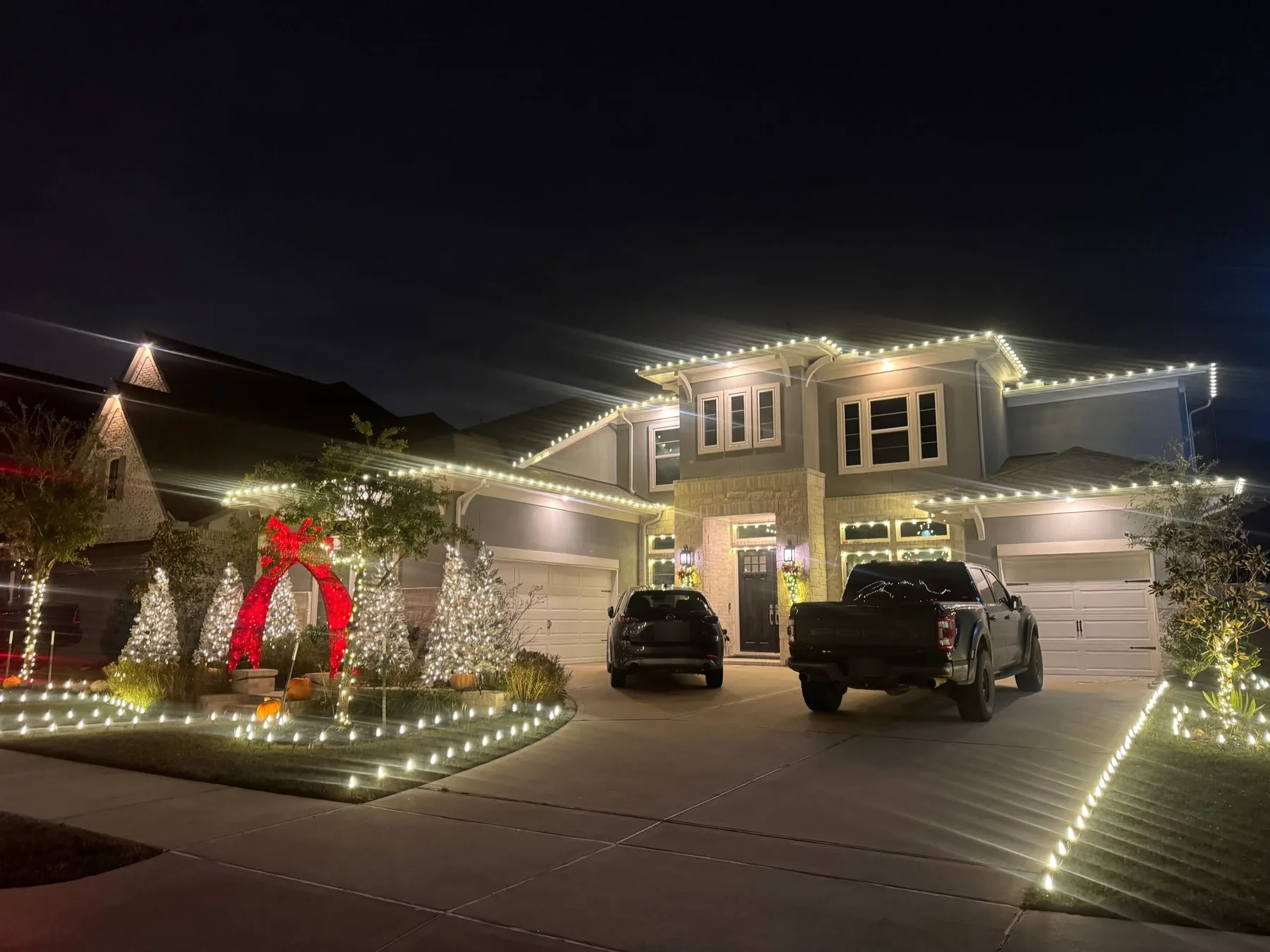
A bow can be the single color in a warm white display. A large red bow on a wreath or at the center of a garland draws the eye and gives the design its accent. Our gallery includes homes with giant bow arches that turn a walkway into a gateway.
Ribbon should be outdoor-rated, since ordinary ribbon fades and frays quickly in the Texas sun. Choose a weight and width that read from the street, and keep the color in line with the rest of the display.
Ornaments and pinecones add texture, but the more you add, the more the piece reads as a decoration in its own right. If the goal is to complement the lights, keep accents simple.
Taking care of the greenery
Outdoor greenery lives a hard life. Sun fades it, wind pulls at it and rain soaks it. Artificial pieces of good quality hold up well, but they benefit from being brought in at the end of the season, which is another reason our program removes and stores everything.
If you have your own wreaths and garland from previous years, tell us. We can often work with what you have, lighting it and installing it to fit the design. If it has seen better days, we will say so honestly and suggest an alternative.
For more on how storage and reinstallation work, see storage and the annual reinstall.
Planning the entry first
If you are building a display in stages, begin with the entry. A lit wreath, a garland on the rail and a lit walkway cost far less than a full roofline and have an outsized effect on how welcome the house feels. They are also the elements guests see closest, so any shortcut shows.
Once the entry is right, the roofline and trees can follow in this season or the next. Tell us your plan when you request a quote, and we will sequence the work to make each stage look complete on its own.
Questions people ask
The front door is the classic spot, but windows, garage doors, gates and porch fronts work too. Keep the wreath noticeably narrower than the door but large enough to read from the street.
For most displays, yes. Fresh greenery can dry out quickly in Texas weather, while artificial pieces keep their shape through the season and across years.
Yes. They can be quoted along with the rest of the display, lit to match your lights, removed after the season and stored with your set.
By the Holiday Lights Texas team, a family owned holiday lighting company based in Conroe, Texas. Published October 19, 2026, updated October 19, 2026. Every figure and policy referenced here is one the company publishes and honours on real properties. Where the company has not published a policy, this guide says so rather than guessing.
More in DesignAll resources