Why trees matter to a display
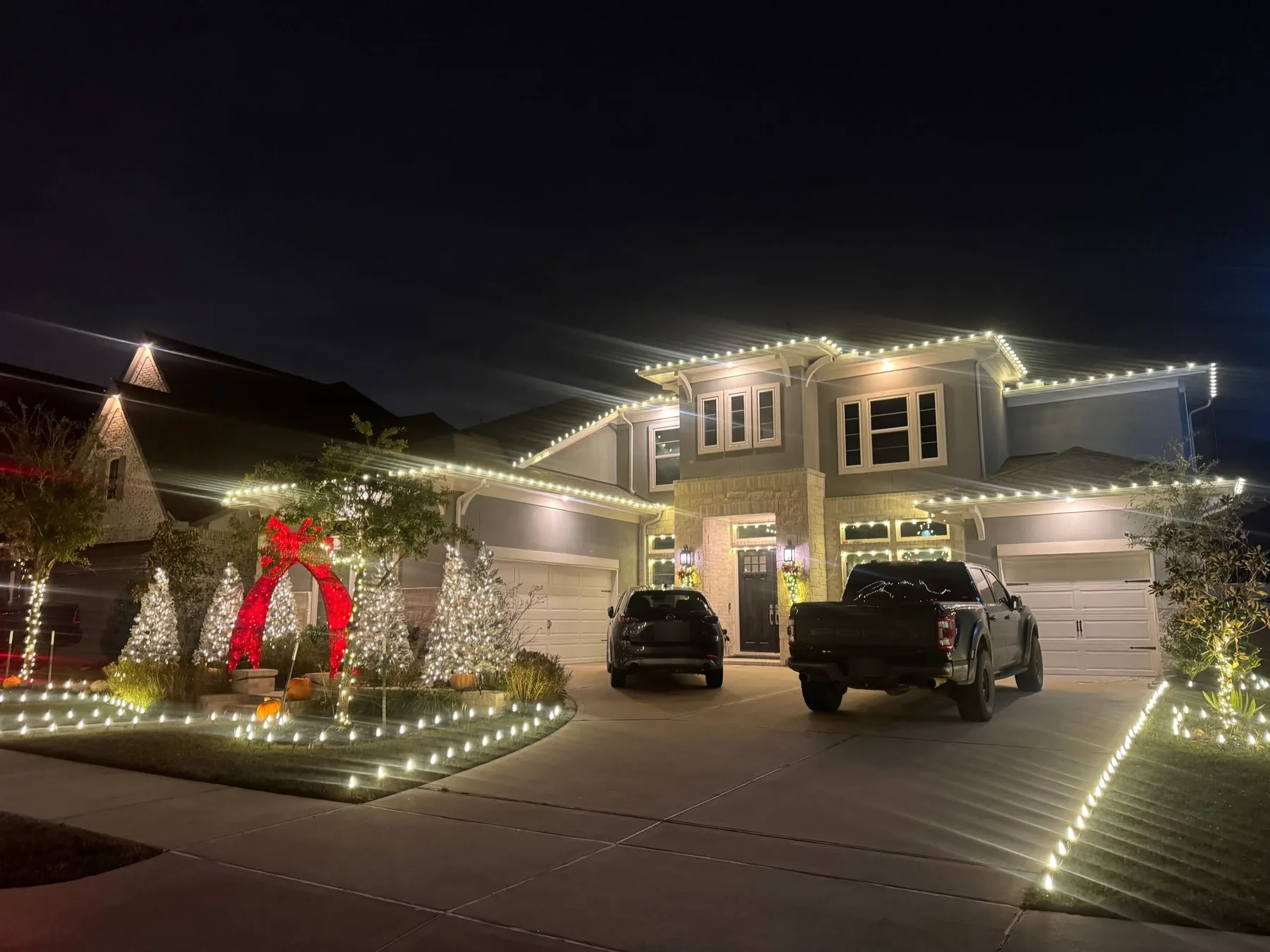
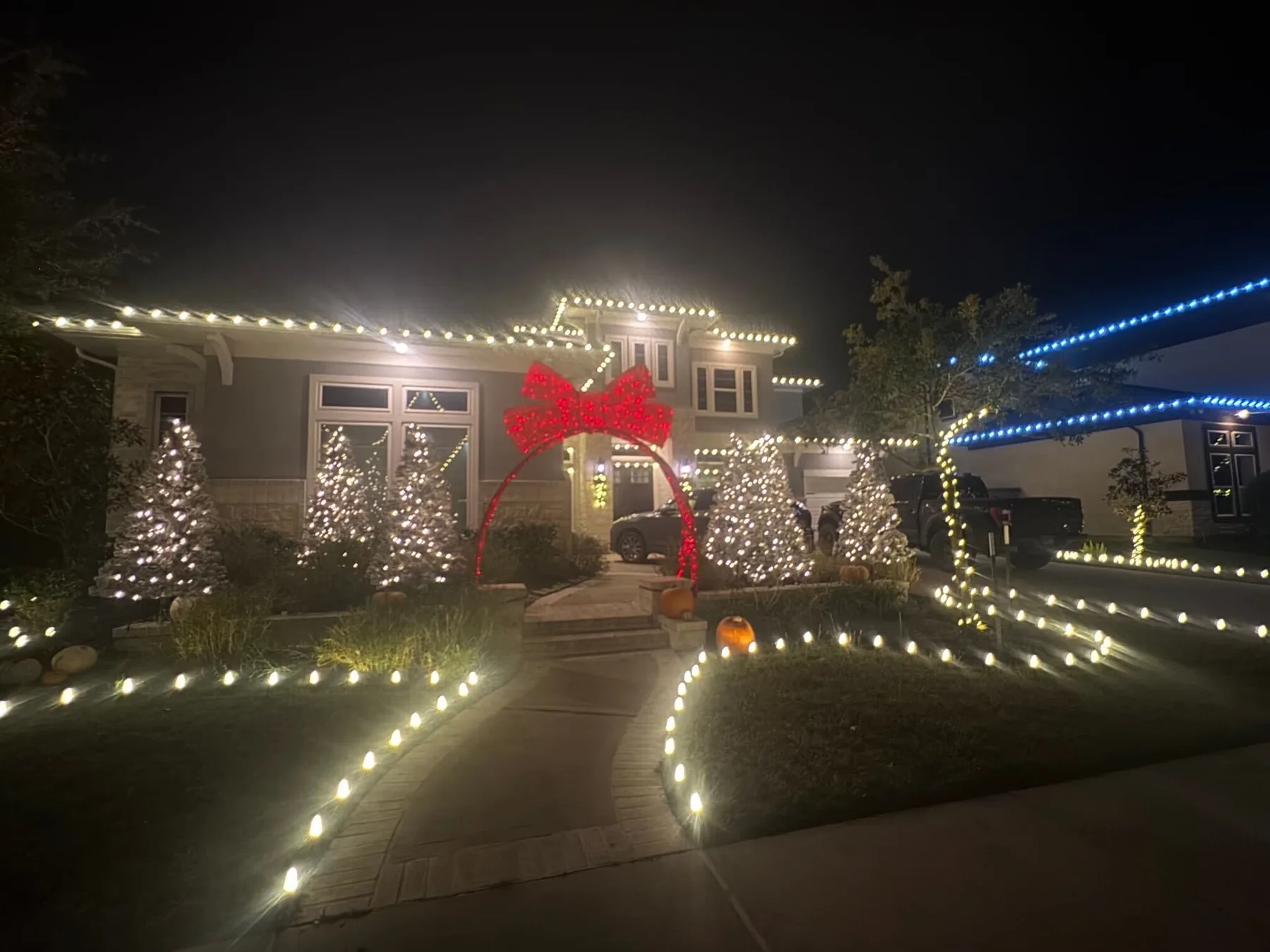
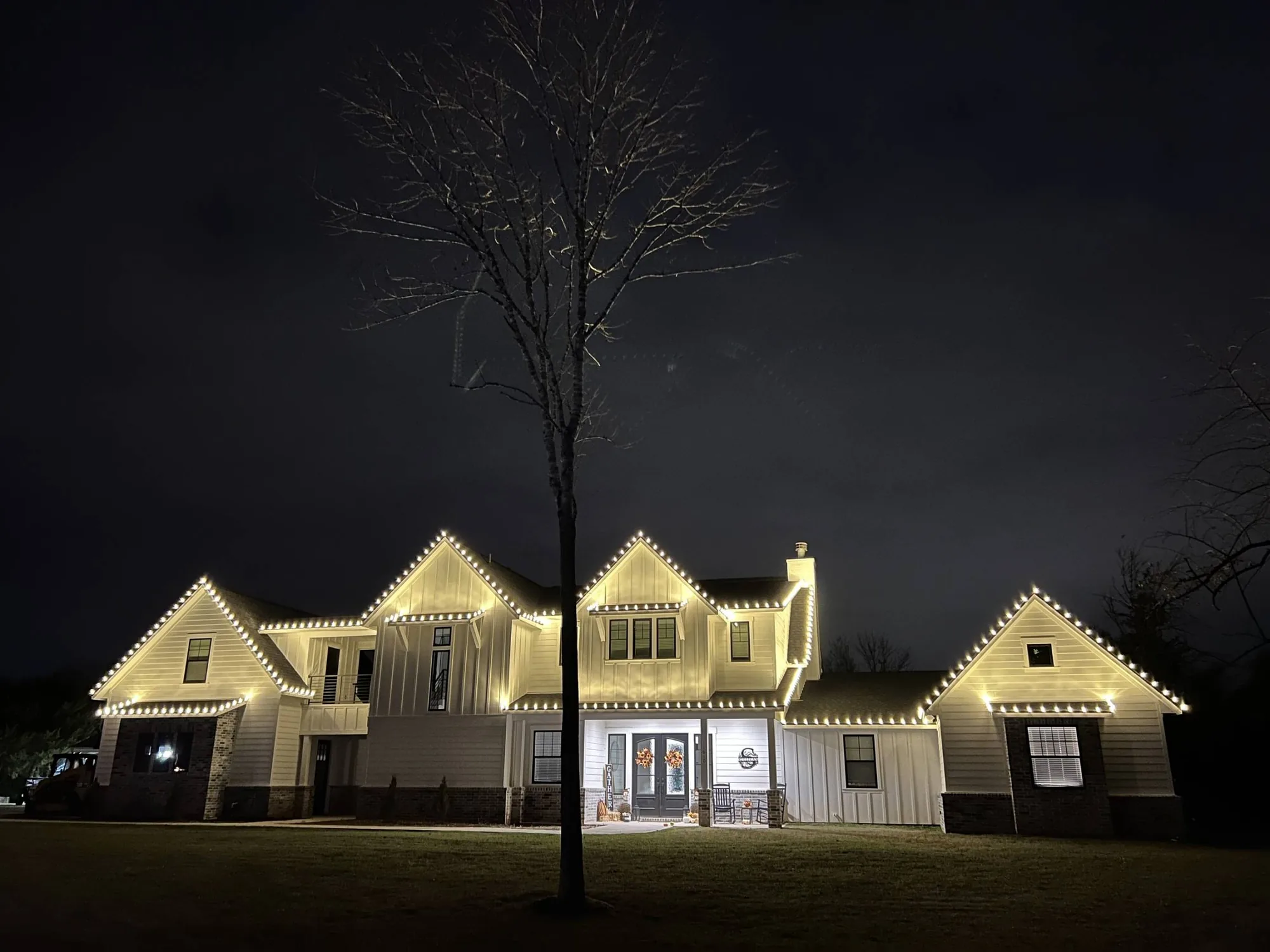
A roofline draws the outline of the house, but it sits at one height. Trees break that line and carry the eye upward and outward, which is why a display with wrapped trees feels fuller than one with the same amount of light on the roof alone. In a front yard, a lit tree is often the first thing a passing car sees.
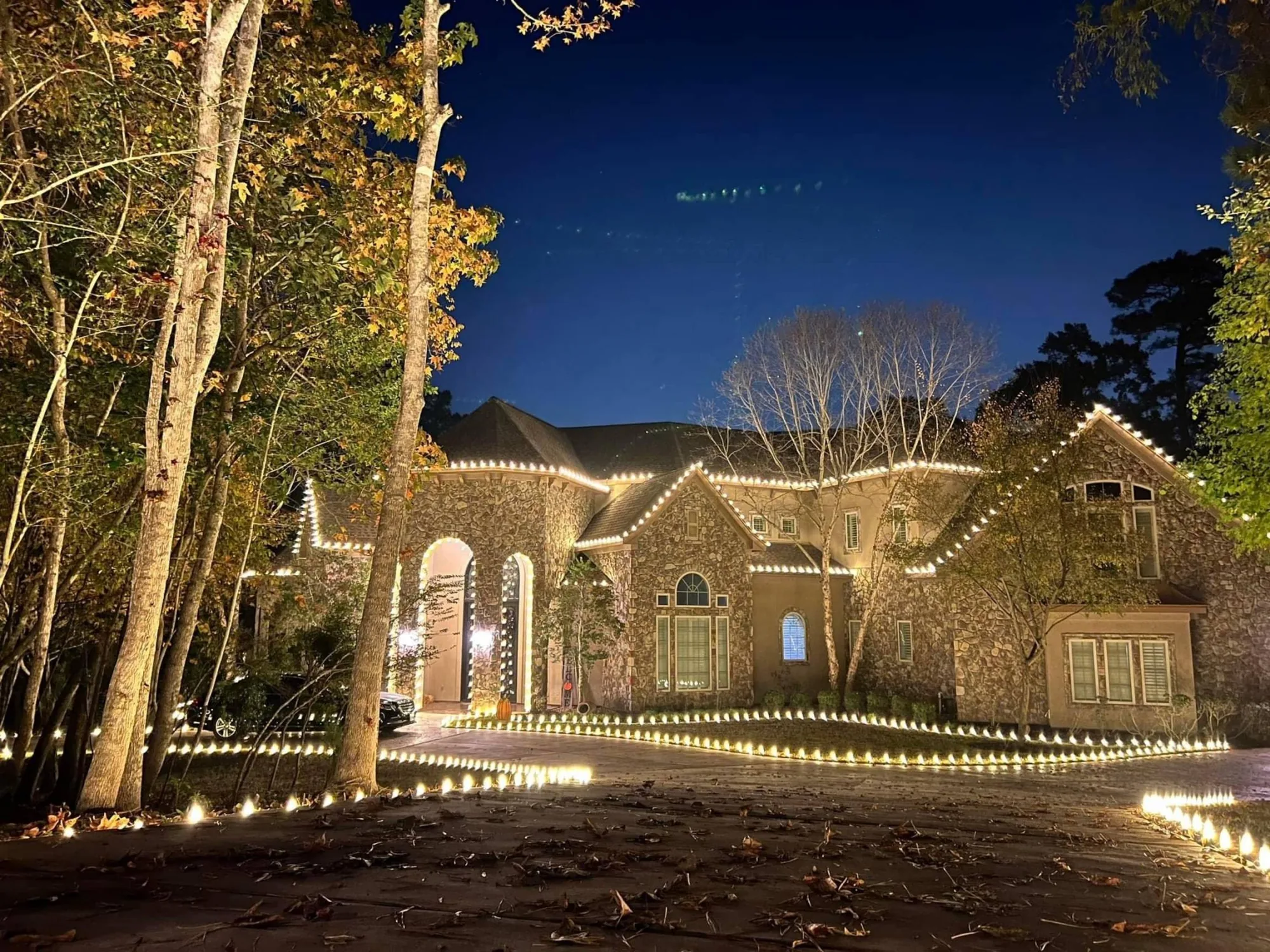
Trees also tie the house to its setting. A lit oak by the driveway or a row of crape myrtles along the walk makes the property feel like a composed scene instead of a building with lights on it. That is the effect most customers are after when they ask us to go beyond the roofline.
The three main styles
Tree lighting comes down to three approaches, and most displays use a mix. The first is the trunk wrap, where lights are wound around the trunk from the base up to the first major branches. The second is the branch wrap, where lights follow the larger limbs up into the canopy. The third is canopy lighting, where lights are placed through the crown to make the whole tree glow.
Each reads differently from the street, and each takes a different amount of lighting and labor. Understanding the differences helps you choose where to spend, because a few well-lit trees usually look better than many half-lit ones.
- Trunk wrap: a clean column of light from the ground to the first branches
- Branch wrap: lights follow the main limbs, giving the tree its shape at night
- Canopy lighting: lights through the crown for a full glowing effect
- Mixed: a trunk wrap plus branch wraps on the lowest limbs
Trunk wraps: the dependable choice
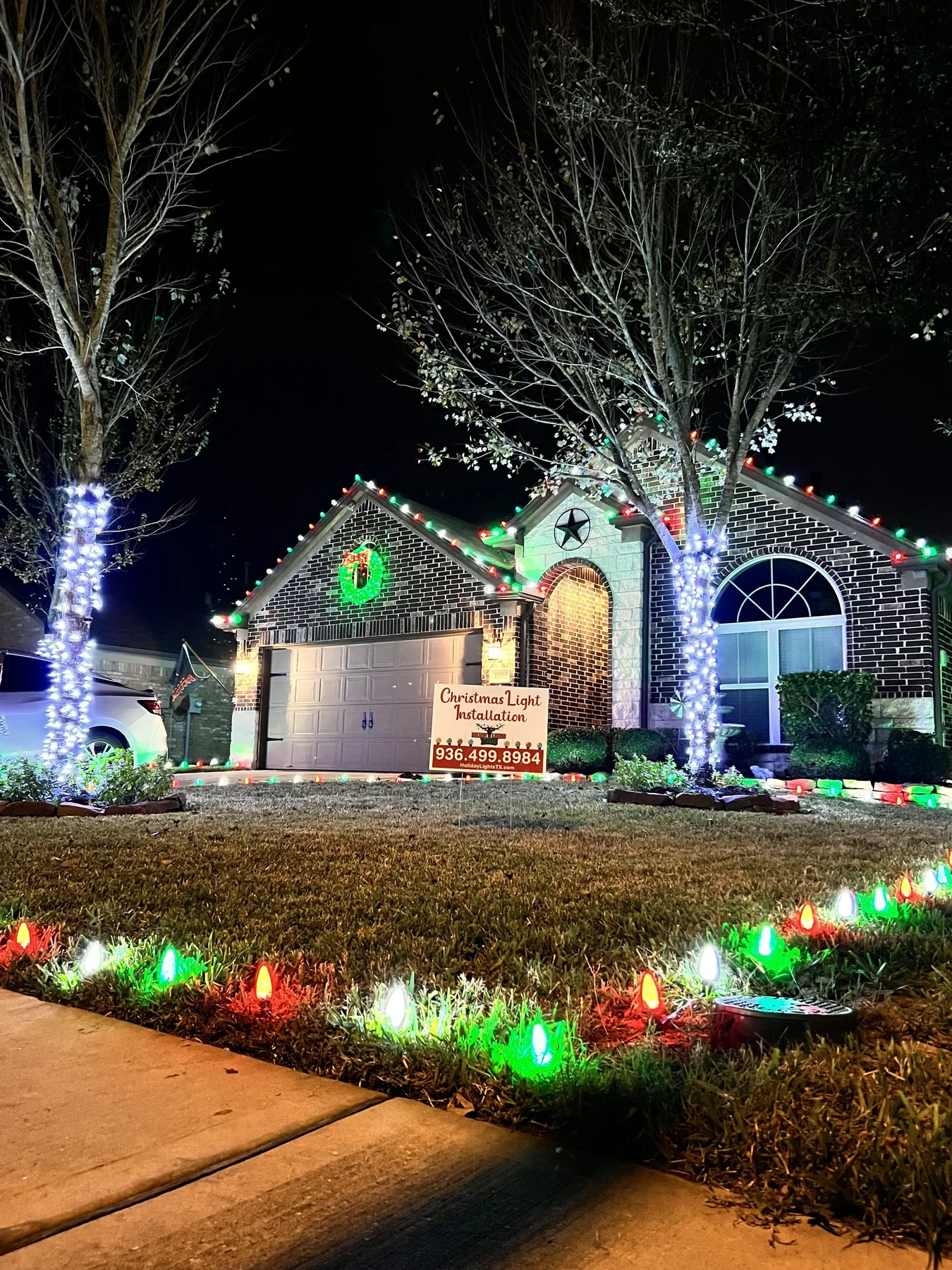
A trunk wrap is the simplest and most reliable way to light a tree. The lights are wound at an even spacing from the base upward, so the trunk becomes a glowing column. It works on almost any tree with a clear trunk, such as live oaks, pecans, crape myrtles and palms, and it looks tidy in daylight as well as at night.
Because a trunk wrap stays close to a stable surface, it is also the most durable. There is less movement in the wind, less strain on the wiring and less to go wrong during the season. For customers who want elegance without complexity, a row of wrapped trunks along the walk or the front of the house is an excellent place to start.
Branch wraps: the dramatic choice
Branch wrapping follows the limbs upward and outward, which outlines the tree's shape against the dark. On a mature tree with a graceful structure, such as a spreading live oak, the result can be striking. It takes more lighting and more time than a trunk wrap, and the price rises with the number of strands used.
It also needs judgment. Branches grow and sway, so lights have to be placed with enough slack to move without strain, and thin or brittle limbs are better left alone. We will tell you honestly which branches are worth wrapping and which are not, and sometimes the right answer is a trunk wrap and the first two or three limbs only.
How trees are priced
Our tree lighting is priced by the strand, at $37 to $42 per strand. A strand covers a set amount of wrapping, so a small tree with a short trunk may take one or two strands, while a large tree wrapped up through its branches can take several. The price rises with the amount of light used, not with a flat fee per tree.
That means you can control the cost. Wrap fewer trees fully, or wrap more trees at the trunk only. The cost estimator lets you set the number of tree strands and see the range change, and our cost guide shows how trees fit into a full quote.
Which trees to light first
Start with the trees closest to the street and the entry, because they are the ones people see. A pair of trees on either side of the walk or driveway gives the display symmetry, and a single large tree in the front yard can serve as a focal point. Trees at the side or back of the property are better saved for a later season.
Think about the view from the street at night. Lights show best against a dark backdrop, so a tree with open space behind it will read more strongly than one hard against a wall or a hedge. If you are unsure, send us photos and we will suggest the three that will do the most.
Caring for the tree
Lights on a tree should never cut into the bark or restrict growth. A good installer winds lights at an even tension, leaves room for the trunk to expand and avoids pulling tight around young or thin-barked trees. Fasteners that dig in or wires left tight for years can damage a tree, which is one reason removal each season, as part of our program, is better for the tree than leaving wraps in place.
Because the lights come down and go into storage after the season, the tree is not carrying them all year. We re-wrap each autumn, adjusting for any growth since the last installation. If a tree has been trimmed, removed or has grown noticeably, tell us so the plan can be updated.
Combining trees with the rest of the display
Trees work best when they relate to the rest of the lighting. If the roofline is warm white, wrap the trunks in the same warm white. If you have chosen a color scheme with accents, use the accent color on a few trees and keep the others white. Repeating a color between the roof and the trees ties the whole picture together.
For more on combining elements, see roofline versus full-property lighting, and for the effect of bulb size on trees, C9 versus mini lights. To try it on your own house, use the see your home in lights tool and our tree lighting service page.
Trees in Texas yards: what we see
The trees in Greater Houston yards vary widely. Live oaks, pecans and pines are common in the Conroe and Woodlands area, and crape myrtles, magnolias and palms appear throughout the region. Each has a different shape and suits a different treatment: a straight pine trunk takes a clean wrap beautifully, a spreading live oak rewards branch lighting, and a crape myrtle with several slender trunks can be wrapped as a group.
Because every tree is different, we look at yours before recommending a treatment. Send photos with your quote request, or let us see them on the site visit.
Planning for growth and removal
Trees change from year to year. Branches grow, limbs are trimmed, storms take things down. Because we reinstall each season rather than leave wraps in place, the lights are adjusted to the tree as it is that year. If a tree has been removed or trimmed, tell us and the plan is updated.
If you are planning to remove or prune a tree, do it before the season rather than after the lights are up. It is easier to adjust the design than to work around a limb that is about to come down.
Questions people ask
Tree lighting is priced by the strand, at $37 to $42 per strand. A small trunk wrap may take one or two strands, and a large tree wrapped into its branches takes more.
They should not. Lights are wound at an even tension with room to grow, and because the display comes down after the season, the tree is not wrapped all year.
Trunk wraps are cleaner, more durable and less expensive. Branch wraps are more dramatic on tall, well-shaped trees. Many displays use a trunk wrap plus the lowest branches.
By the Holiday Lights Texas team, a family owned holiday lighting company based in Conroe, Texas. Published October 19, 2026, updated October 19, 2026. Every figure and policy referenced here is one the company publishes and honours on real properties. Where the company has not published a policy, this guide says so rather than guessing.
More in DesignAll resources