What the names mean
C7 and C9 describe the shape and size of the bulb. The number refers to the bulb's diameter in eighths of an inch, so a C7 is about seven-eighths of an inch across and a C9 is about nine-eighths, just over an inch. The two use different sockets, which is why they are not interchangeable. Bulb length varies by manufacturer, with figures cited from roughly two to two and a half inches for a C9.
Mini lights are much smaller, the tiny bulbs on a classic indoor tree strand. They come in several shapes, with the 5 millimeter LED being the common outdoor version. The practical difference is scale: a C9 reads from across the street, and a mini light reads from across a room.
Why C9 is the roofline standard
A roofline is a long, high, distant line. To read from the street at night, the bulbs need enough size and brightness to register against a dark sky and a dark roof. C9s are the usual choice for that reason, because each bulb is large enough to form a clean, readable outline from a distance.
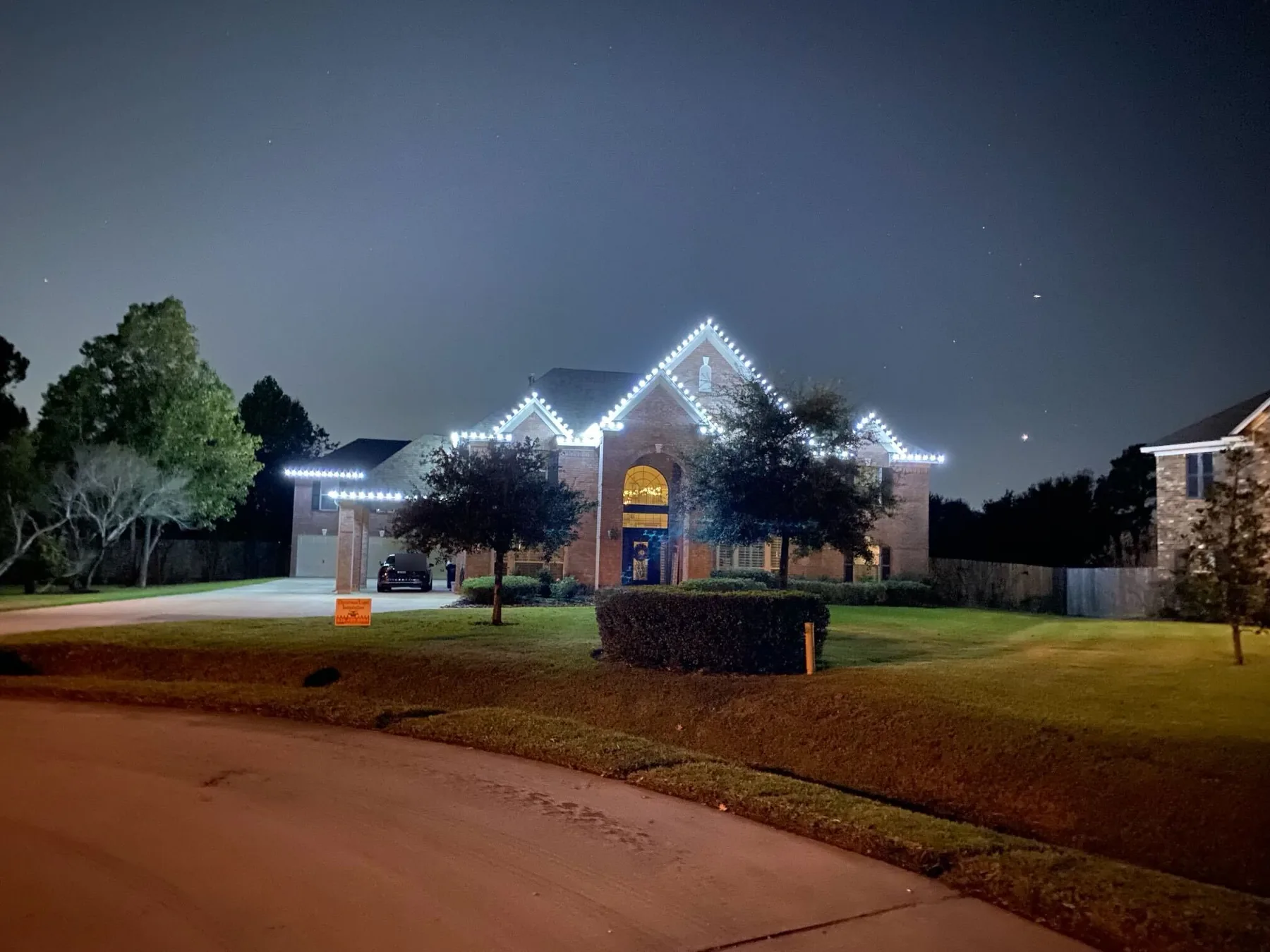
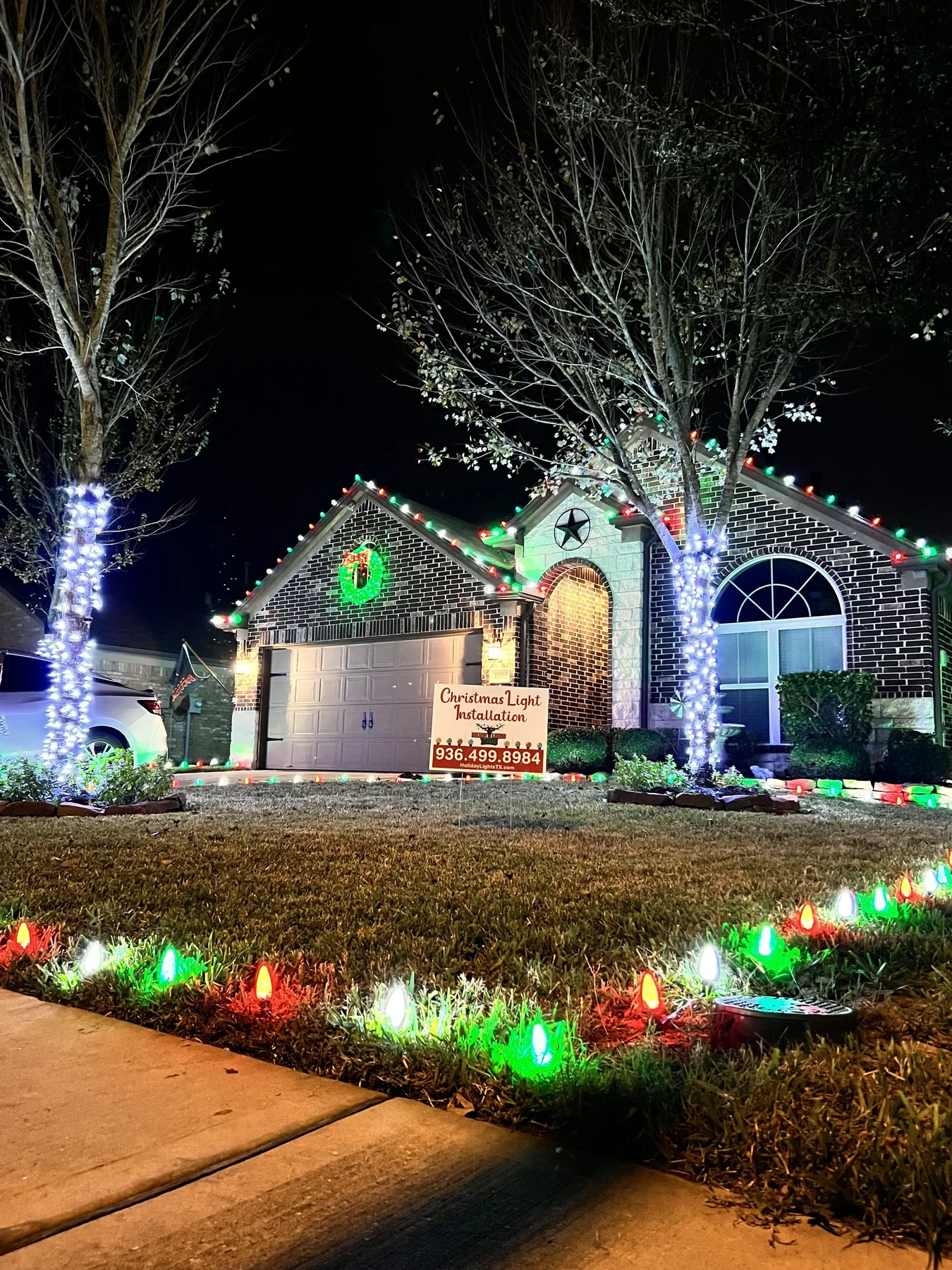
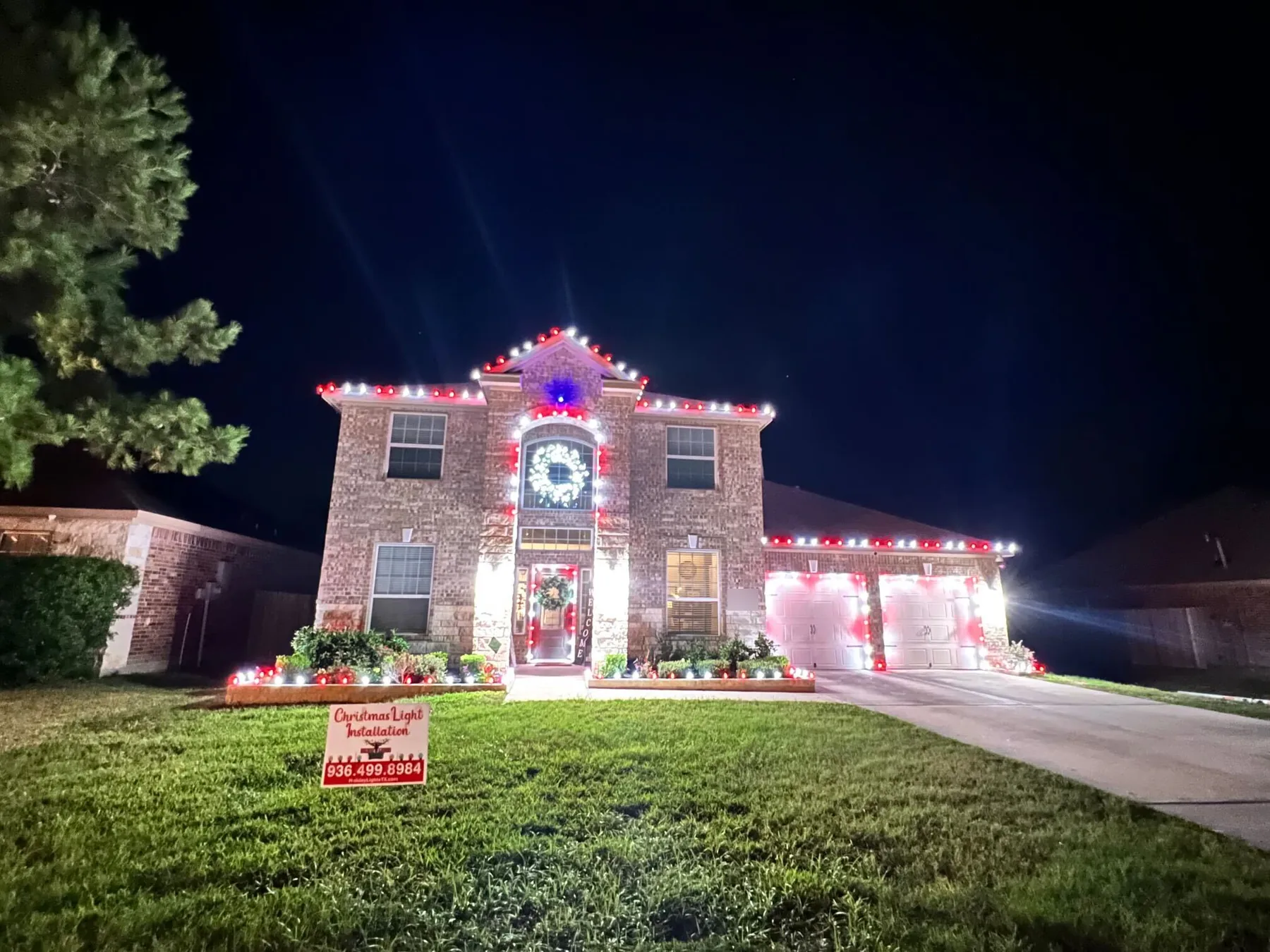
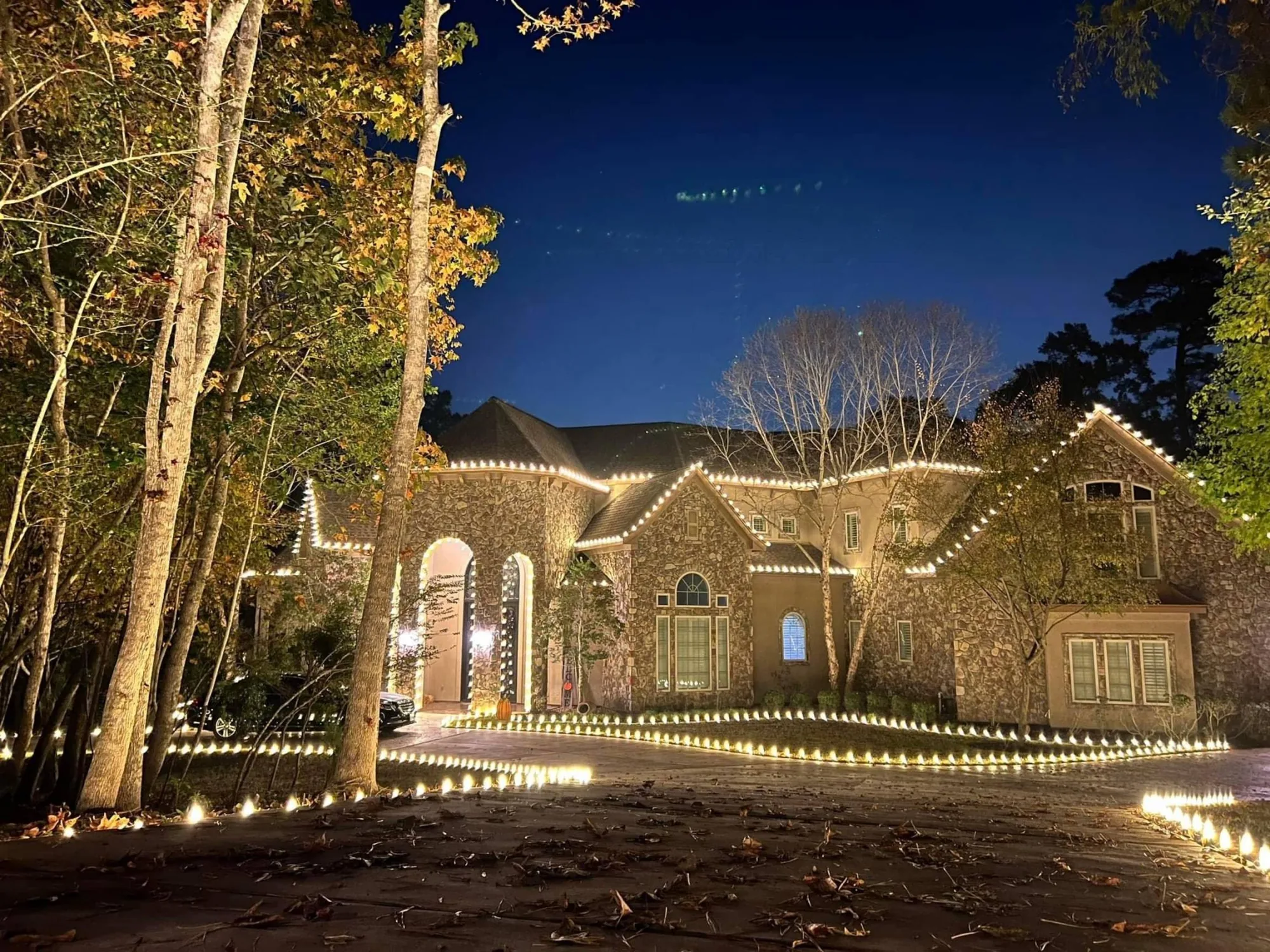
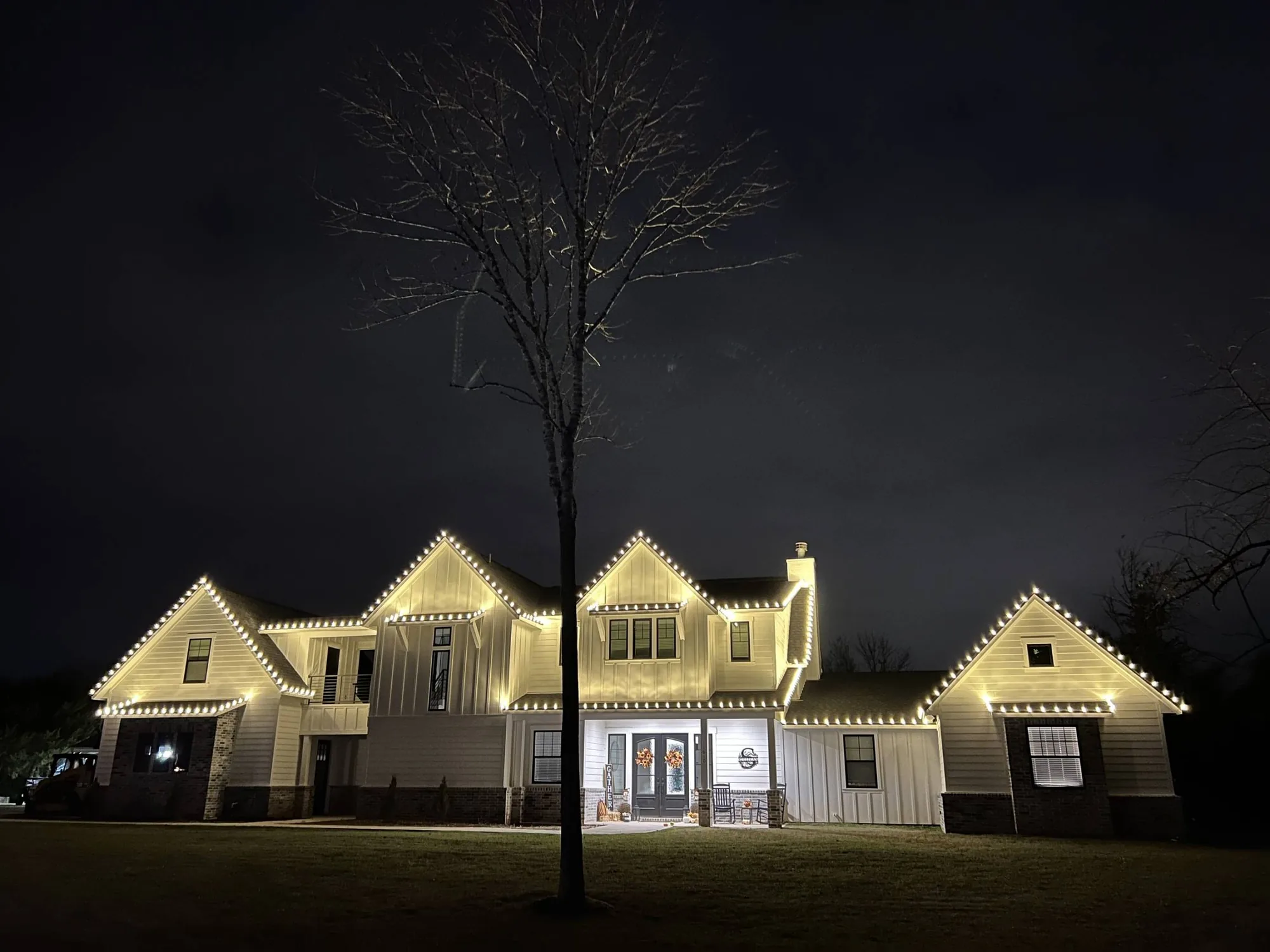
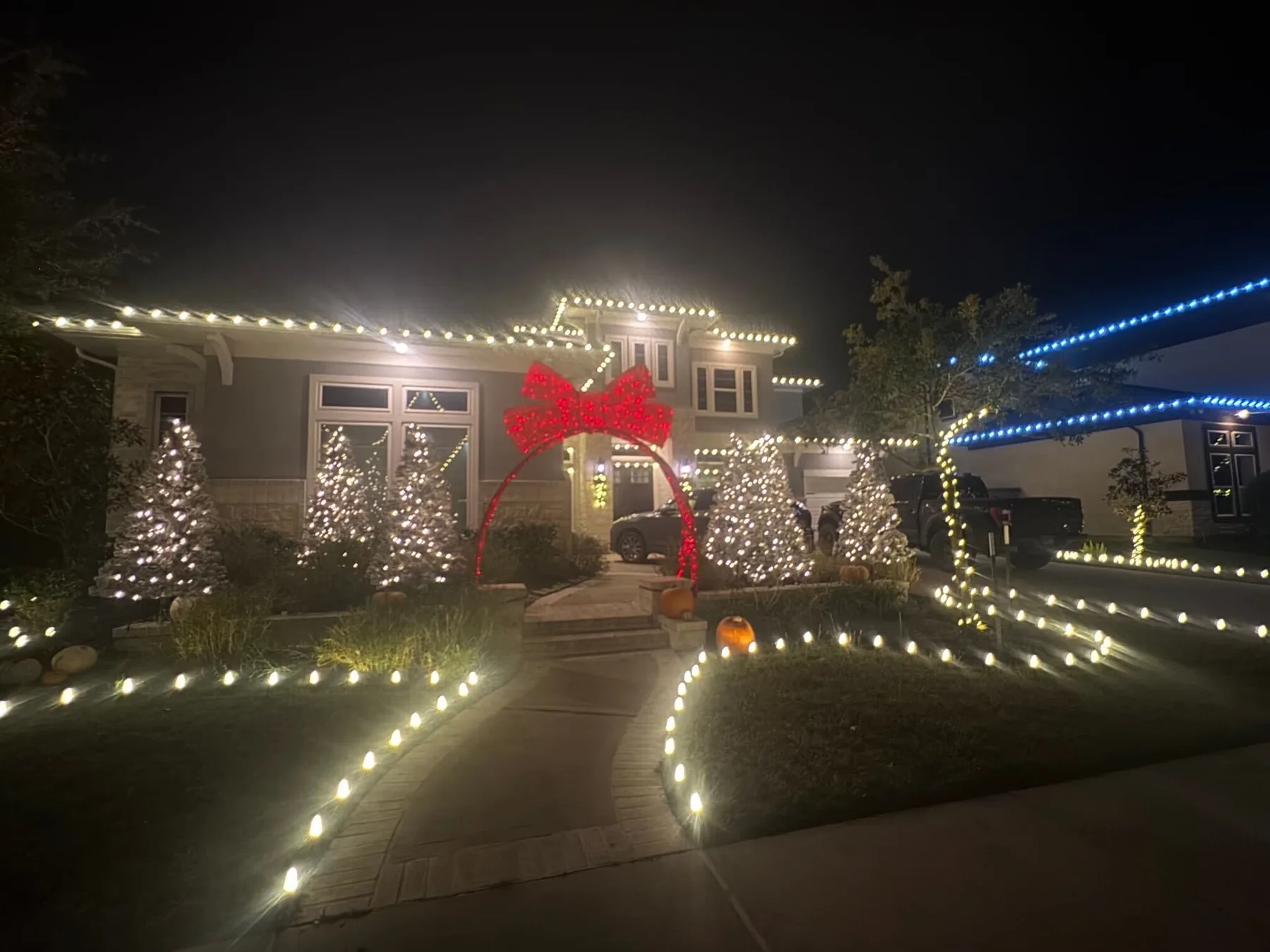
In our own photos, rooflines and ground lines use larger-bulb sets. Notice how the line holds together at a distance on a two-story gable, where small bulbs would blur into a haze. That clarity is the point of the larger bulb.
Where C7 and smaller bulbs work
Smaller bulbs suit closer viewing. Porch railings, window frames, door surrounds and garden borders are seen from a few feet away, where a large bulb can look heavy. A C7 or a smaller bulb gives a finer, more detailed line in those places.
A good design often mixes sizes on purpose: a bold line along the roof, a finer line around the entry, and small lights wrapped on trunks and branches. The mix gives the display depth, with the eye moving from the broad outline to the detail as it gets closer.
Trees want small lights
Outdoor tree wrapping is typically done with small, closely spaced lights rather than C9s. A trunk is a narrow cylinder, and small bulbs wrapped at even tension give a continuous glow that large bulbs would break into dots.
That is why you see C9s on a roofline and small lights on trunks in the same display. It is a deliberate choice rather than an inconsistency. See tree wrapping: trunk versus branches.
Spacing and how much light
Spacing sets the rhythm of a line. Retailers commonly suggest around 12 to 18 inches between C9 bulbs on a roofline, with wider spacing for tall rooflines seen from a distance. We do not publish a single spacing because the right number depends on the house, but the principle is that bulbs should be even and consistent, with corners that still read as one line.
Custom cutting is what makes that possible. When a strand is measured to your roofline, the spacing is set to your house instead of dictated by the fixed length of a retail set. That is how corners read as a continuous line and no gaps appear where two strands meet.
A quick guide
If you want a simple rule, use larger bulbs for the long, high lines the street will see, and smaller bulbs for the details people see up close.
- Roofline, gables and ridge: C9-style, for a bold readable outline
- Porch rails, windows and door frames: C7 or smaller, for finer detail
- Tree trunks and branches: small closely spaced lights
- Walkways and driveway edges: stake-mounted larger bulbs
- Wreaths and garland: small lights woven in
What we use
Holiday Lights Texas uses professional-grade, weather-rated LED lighting, custom cut for each property. It is not product you can buy at a hardware or big-box store, and it is built to stay lit through a Texas winter. We will recommend the combination that suits your house when you request a quote.
To see the difference in practice, browse the gallery and compare how rooflines, trunks and walkways read in our own photos.
How bulb size changes color and warmth
Bulb size affects how color reads at a distance. A larger bulb shows more lit surface, so a warm white C9 looks richer and more saturated from the street than the same color in a tiny mini light, which can look thin and slightly cooler. If you are choosing a warm look, the larger bulb is the one that delivers it at distance.
That is also why mixed-color displays tend to use larger bulbs. Red, green and blue need enough lit area to register as color rather than as pinpricks. Our guide to color schemes that work and warm versus bright white go deeper on choosing the tone.
Why professional sets are not interchangeable with retail
A retail strand comes in a fixed length with fixed spacing and a plug at one end. That works for a tree in a living room, but it leaves you with awkward leftover lengths on a roofline and visible joins where one strand meets another. It also tends to be rated for lighter seasonal use.
A professional install uses commercial-grade lighting that is custom cut to the property, so the bulb spacing runs evenly through corners and the line reads as one continuous outline. It is not product you can buy at a hardware or big-box store, and it is the difference that most people notice without being able to say why.
Choosing for your own house
If you are unsure, start from the viewing distance. Anything the street will see, such as eaves, gables and the ridge, wants a bold, larger bulb. Anything a guest will see from the walkway, such as the door, porch columns and railings, can take a finer bulb. Anything wrapped around a trunk wants a small, dense light.
Then think about the architecture. A traditional brick home often looks best with classic larger bulbs in warm white. A modern home with clean lines may suit a tighter, more minimal line. When you request a quote, send a photo and we will recommend the combination, and you can compare examples in the gallery.
You do not need to memorize bulb numbers to get this right. The purpose of this guide is to help you recognize what you are looking at in photographs and quotes, so that when we propose a plan you can see why each choice was made.
Brightness and the neighbor test
More light is not automatically better. A display that is far brighter than the neighboring houses can look harsh, and it can bother the people living next door. Good design aims for a warm, even glow that reads clearly from the street without spilling into windows.
If you live in a neighborhood with an HOA, brightness and color rules may apply, and it is worth checking them before you decide. Our guide to HOA rules for Christmas lights in Texas explains what to look for.
A quick summary
If you remember only one thing, remember scale. Use large bulbs where the viewer is far away and small bulbs where the viewer is close. Keep spacing even, keep the white consistent and let the architecture decide the lines. When you want help, send us a photo of your home and we will recommend the combination and show you how it will look before anything is installed.
Questions people ask
It describes the bulb's size and shape. The number is the bulb diameter in eighths of an inch, so a C9 is about nine-eighths of an inch across.
Yes. Their size makes a clear outline from the street, which is why they are the usual roofline choice.
Yes, and it often looks best. Use larger bulbs for long high lines and smaller ones for details and trees.
By the Holiday Lights Texas team, a family owned holiday lighting company based in Conroe, Texas. Published October 19, 2026, updated October 19, 2026. Every figure and policy referenced here is one the company publishes and honours on real properties. Where the company has not published a policy, this guide says so rather than guessing.
More in DesignAll resources