Why plan the two seasons together
A house lit for Halloween and Christmas needs the same things measured twice. The roofline is the same length, the gables are the same height and the trees are in the same places. If the two seasons are planned separately, that information is gathered twice and the display is installed and removed twice without any coordination.
Planned together, the second season is easier than the first. The measurements already exist, the access is known and the design can build on what worked. That is why many homeowners ask us about exactly this, and why we suggest raising it when you first book.
What carries over
Because our lighting is custom cut to your house, the measurements and the plan for each run are already recorded after the first installation. The lines of the roofline, the positions of the trees and the ground paths do not change between October and December. That is the foundation of both displays.
Where the color is the same, some elements can stay. A white line along the gables, for example, could remain through both seasons while accents change. Ask us how we handle the switch for your property, since the best answer depends on the design.
What changes
The color scheme changes, and with it some of the pieces. Purple and pink give way to warm white, red and green or whatever you have chosen for Christmas. The trees may be rewrapped, the ground lines recolored and the entry dressed with a wreath and garland in place of Halloween accents.
The mood changes too. Halloween is playful and a little dark, while Christmas is warm and welcoming. The design for each should feel different even though it sits on the same bones. See color schemes that work for Christmas options.
The calendar from October to December
A typical sequence runs like this. Halloween lighting goes up in early to mid October and stays through the end of the month. In the first days of November, the Halloween pieces come down, and the Christmas set is installed. Daylight saving time ends on Sunday, November 1 this year, so sunsets are earlier from that weekend and the new display gets noticed.
Thanksgiving is Thursday, November 26. Many customers have the Christmas display up before that weekend and switch it on once the holiday has passed. Others switch on the first of the month. Whatever you choose, tell us at booking so the dates can be held.
Making the handover smooth
The risk in a two-season program is a gap, or a clash, where Halloween is still up when Christmas is due or the dates are tight. Booking both together removes it. We confirm install and takedown dates with you in advance, and we plan the crew's time so the handover happens on the days you want.
If you only learn about the idea in late October, call anyway. We will tell you what is possible this season, and if a full switch is too tight, we will suggest an alternative such as leaving the white lines in place.
Budget and pricing
Halloween is quoted for your property, since we have not published a rate card for it. Christmas pricing is published: rooflines at $6, $8 or $10 per foot by height, ground lighting at $5 per foot and tree strands at $37 to $42, with a minimum package of $799. See the cost guide.
Ask for both quotes together. Because the measurements already exist, we can tell you how the two programs fit together.
Next steps
Start with a quote request that mentions both seasons. Send a photo of the front of the house, your colors for each season and your preferred dates. We will come back with a plan and a price for each.
You can read about each season on its own page: Halloween lighting and residential Christmas lighting.
Options for the switch
There are three common ways to handle the move. The first is a full change: the Halloween pieces come down and the Christmas set goes up in a single visit or two. The second is a partial change, where a neutral element such as a white roofline stays and the colored accents change. The third is to treat the two seasons as separate programs on separate dates.
The best option depends on the design, the colors and your calendar. A white-and-purple Halloween display, for example, lends itself to a partial change, while a full-color Halloween scheme may need a complete swap for Christmas.
Tell us what you have in mind and we will recommend the approach.
What it means for your timeline
A switch takes crew time, so it needs a slot in the calendar. Early November is when many customers want their Christmas display up, and it is also when we are busiest. Booking both seasons together secures the slot.
If you wait until Halloween has passed to think about Christmas, you may still find a date, but you will have less choice. The earlier the better, as we explain in when to book Christmas light installation.
We confirm dates in advance, and you do not need to be home for either visit.
Design continuity between seasons
A thoughtful program lets the two displays share a structure. If the roofline lines, tree positions and ground paths are the same, the house looks like itself in both seasons, just in different clothes. That continuity is a form of quality, and it comes from planning the whole year at once.
It also helps with budgeting. Because the Halloween measurements carry over, the Christmas plan can build on them. Ask us about the combined cost when you request your quote.
If you would like to see the options, the lights preview tool lets you try different colors on the same photo of your house.
After the holidays
When Christmas is over, the Christmas set comes down and goes into storage with the rest of your pieces, labelled and ready for next autumn. The cycle then starts again: Halloween in October, Christmas in November, takedown in January.
If you would like to build that rhythm into your year, tell us. A program that runs on a calendar is simpler for you than a series of separate projects. See storage and the annual reinstall.
Questions to ask before you book both seasons
Ask how the two installs will be scheduled, what happens to the Halloween pieces after the first season, whether any of the lines can stay in place and what the combined cost will be. Ask also what the plan is if weather delays the switch.
These are the same questions we would ask in your place. We are glad to answer them when you request a quote, and we put the answers in writing.
A sample plan for one house
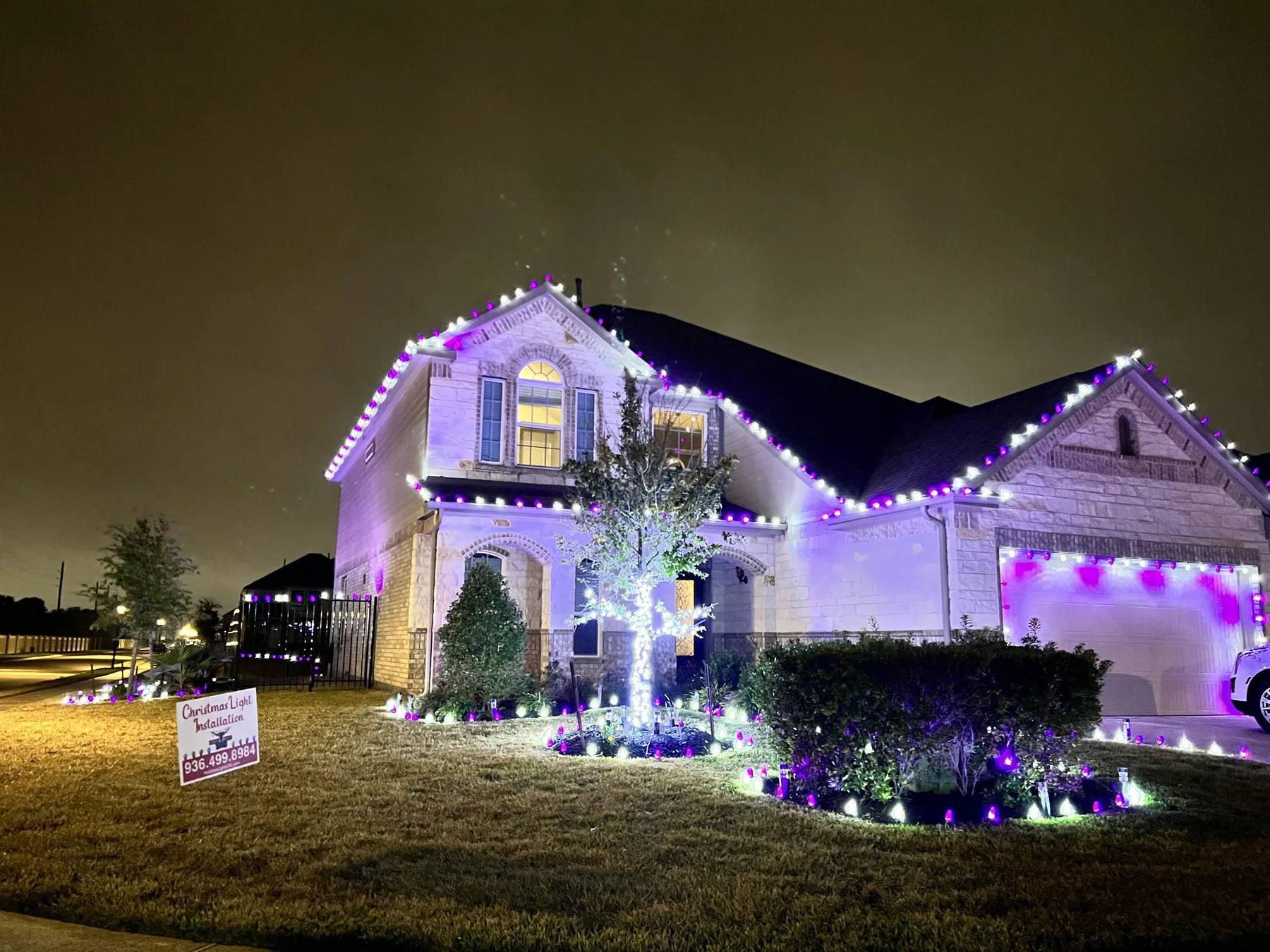
Imagine a two-story home with a purple and white Halloween display on the gables and garage, a wrapped tree and a lit front bed. In the first days of November the purple comes off, the white lines stay, the tree is rewrapped in warm white and a wreath and garland are added to the entry. The result is a Christmas display that grows out of the October one.
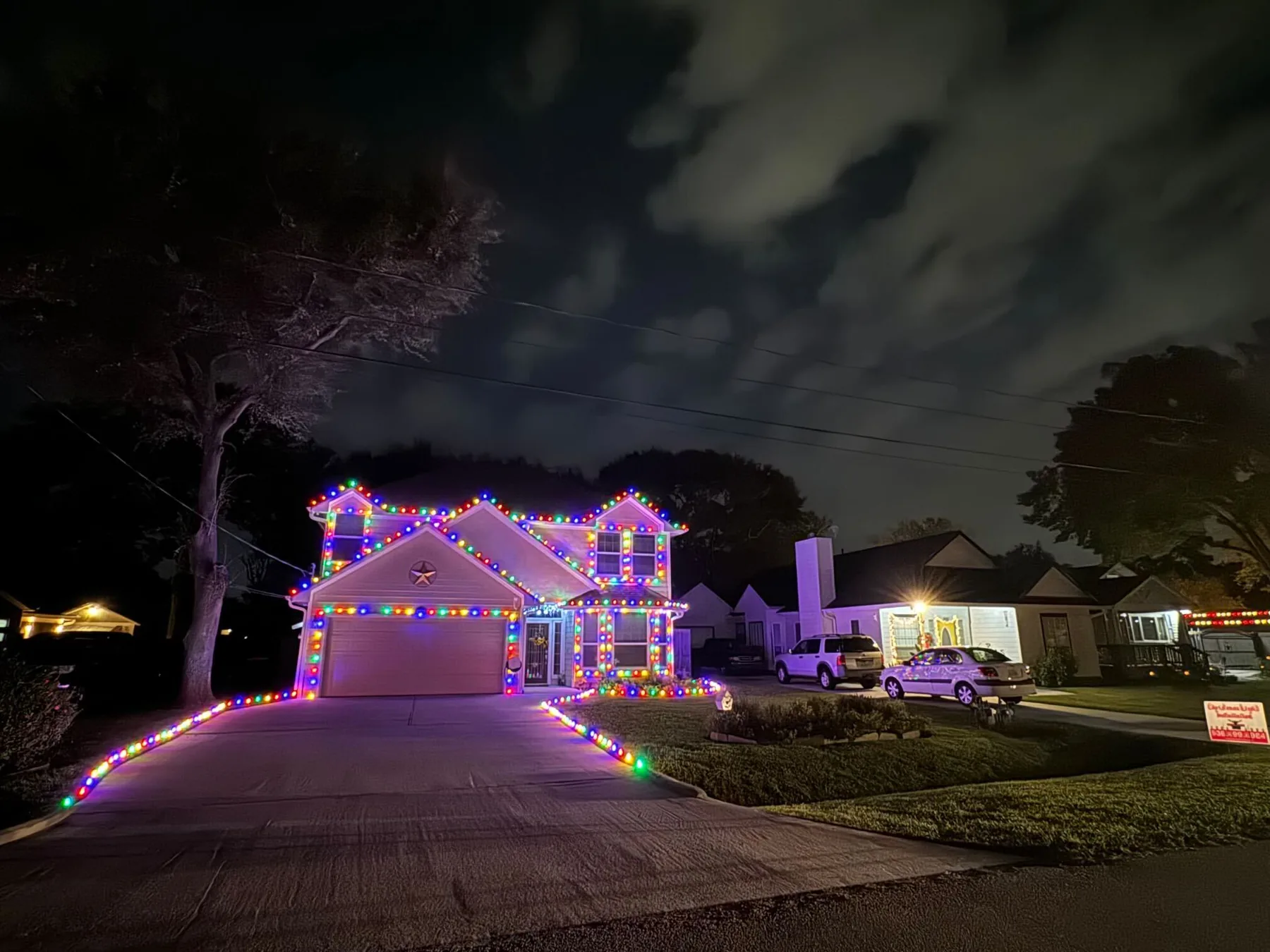
A full-color Halloween scheme would need a bigger change, but the principle is the same: the structure carries over and the color changes. The more of the house you light in white, the easier the switch.
If you are interested, tell us when you request a quote and we will propose a plan for your home.
Questions people ask
Many homeowners ask for exactly that. Ask us how we handle the switch for your property when you book.
No. Because our lighting is custom cut to your house, the measurements already exist after the first installation.
Many customers install in early November and switch on after Thanksgiving, which is November 26 this year. We confirm dates in advance.
By the Holiday Lights Texas team, a family owned holiday lighting company based in Conroe, Texas. Published October 19, 2026, updated October 19, 2026. Every figure and policy referenced here is one the company publishes and honours on real properties. Where the company has not published a policy, this guide says so rather than guessing.
More in SeasonalAll resources