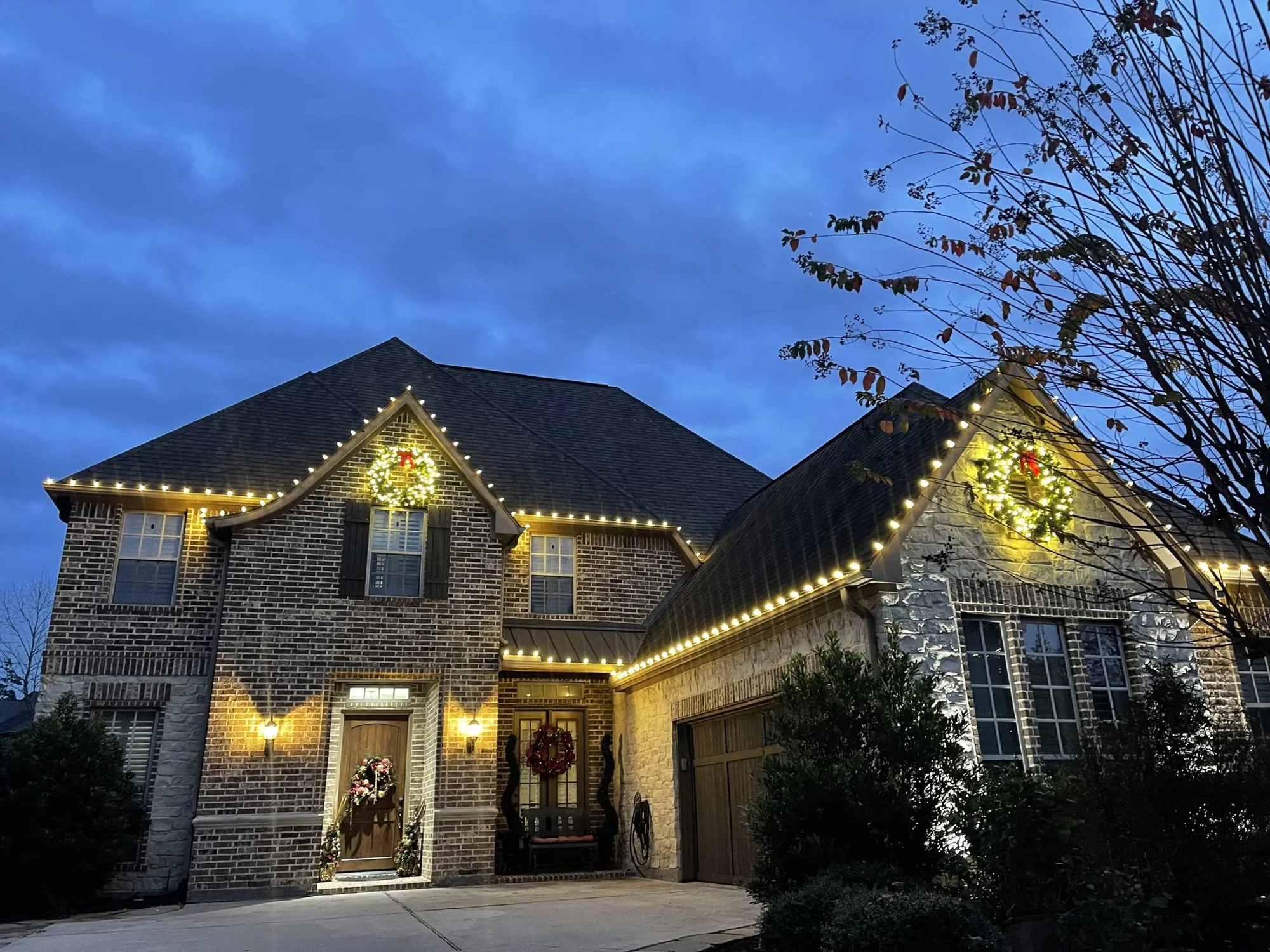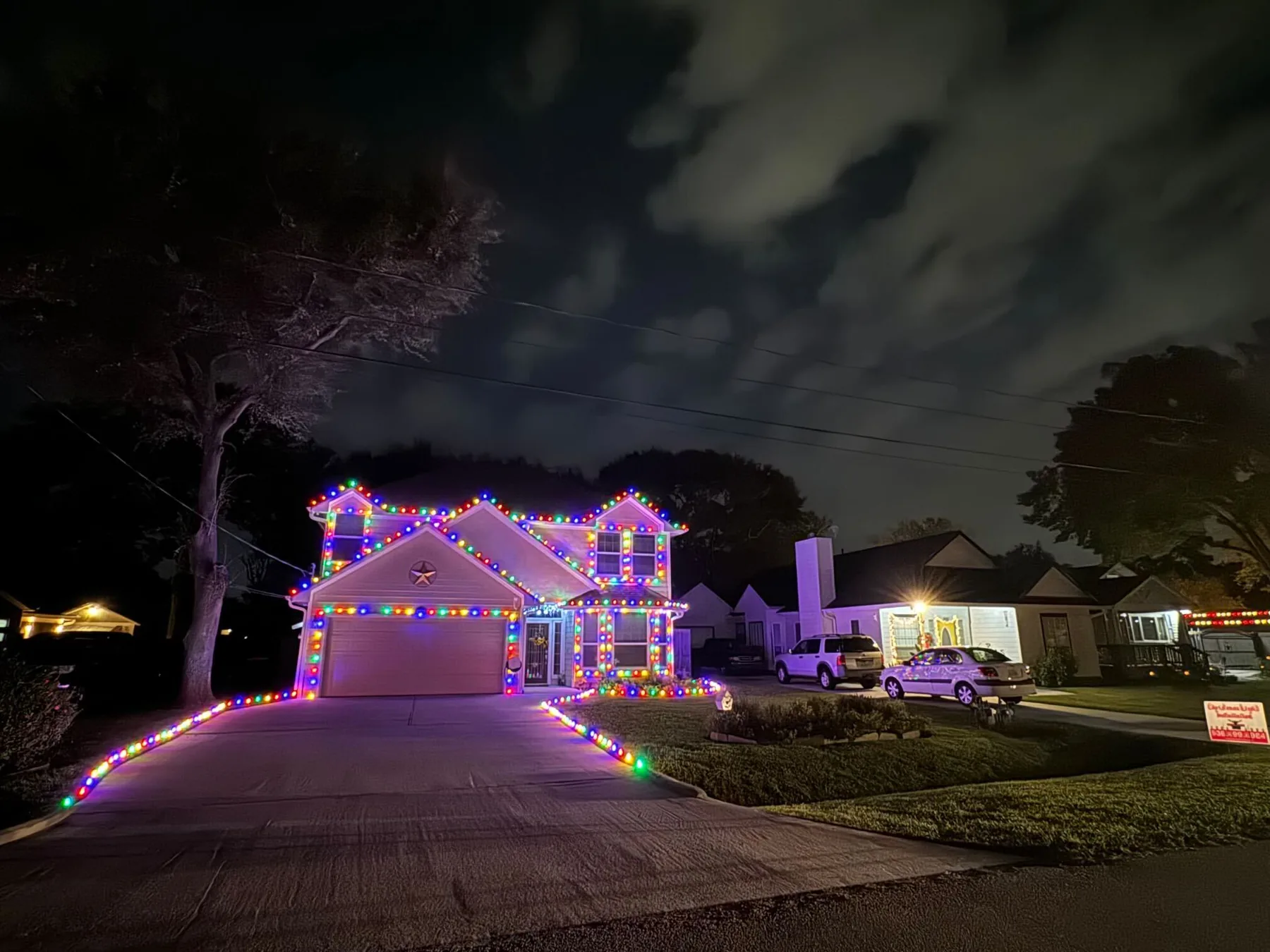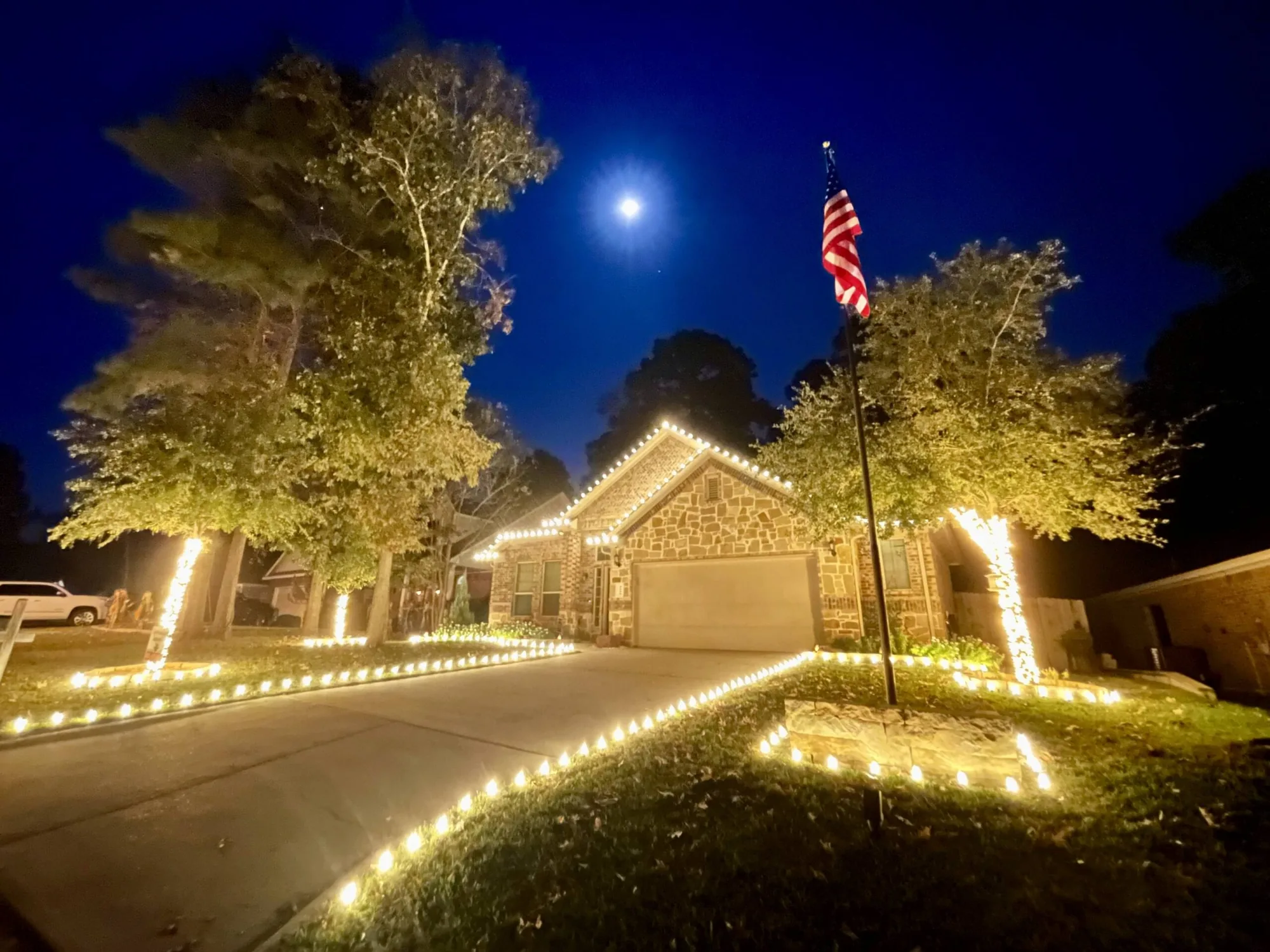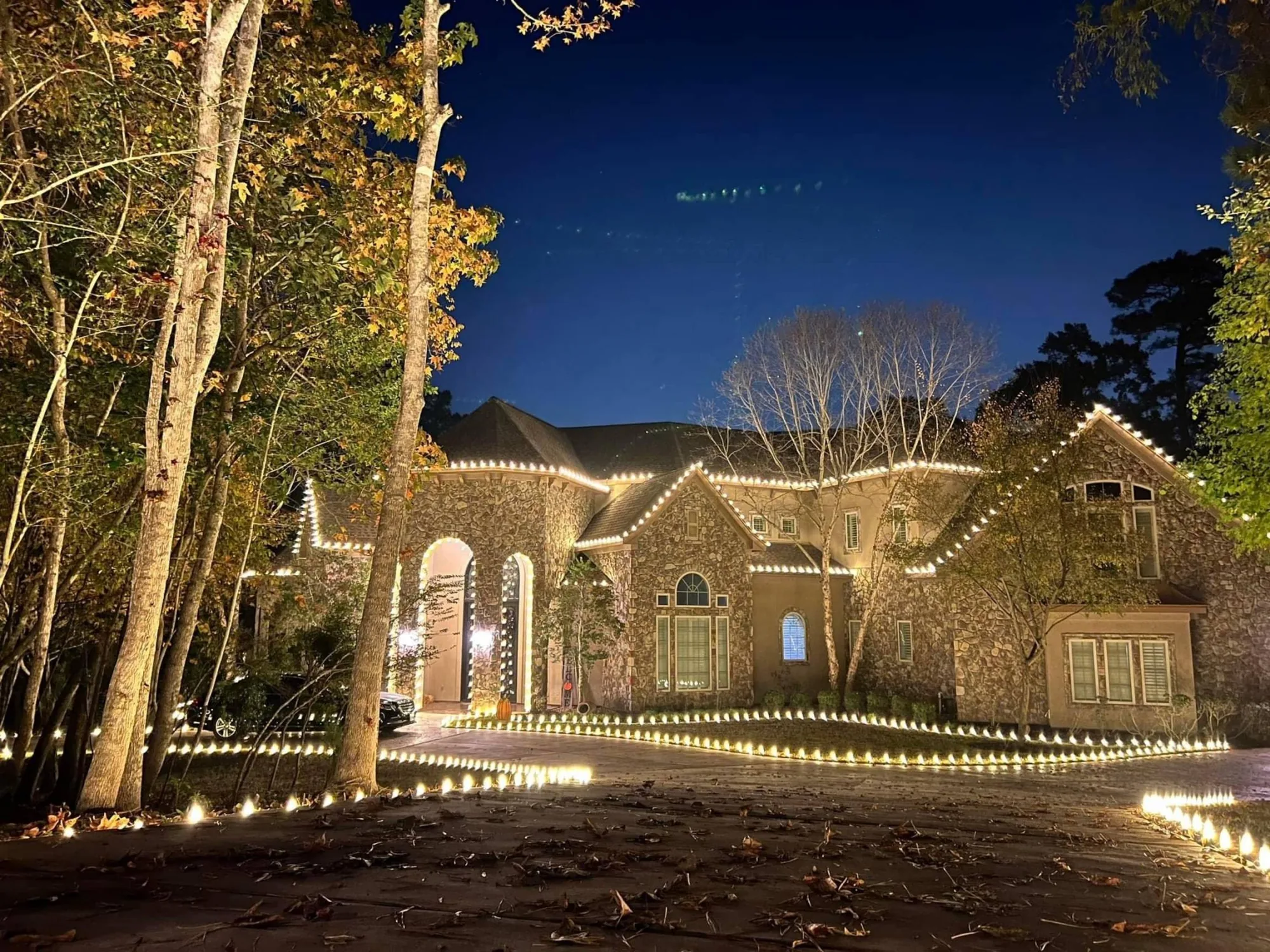
Why the schedule matters
A holiday display that is on at the wrong time is either wasted or invisible. Lights burning at noon do nothing, and lights that go off at 7 p.m. miss the hours when neighbors are out and the street is busiest. A good schedule is a small decision that makes a big difference to how the display is experienced.
It also protects the equipment. Running a display all night, every night, adds hours and heat without adding value. A sensible schedule keeps the lights bright when people are looking and off when nobody is.
The sun decides when to start
Lights should come on around dusk, and dusk moves. In southeast Texas sunset arrives noticeably earlier in December than in October, and the end of daylight saving time, which in 2026 falls on Sunday, November 1, pulls it earlier again overnight. A schedule that looked right on October 31 will feel late on November 2.
That is the argument for a timer that follows the sun rather than the clock. A dusk-sensing or astronomical timer adjusts on its own through the season, so the display comes on when it gets dark whatever the date.
A sensible default schedule
For most households, on at dusk and off between 10 p.m. and midnight works well. That covers the evening hours when people drive past, walk the dog and arrive home, without burning lights through the night. Some families prefer an early-morning window as well, so the lights are on when they leave for work in the dark.
Adjust for your street. If your neighborhood is quiet by 9 p.m., an earlier off time costs nothing. If you host a weekly gathering or live on a route people drive to see lights, extend it. The right schedule is the one that matches when someone is actually looking.
- On at dusk, off between 10 p.m. and midnight for most households
- Consider an early-morning window if you leave before sunrise
- Extend the schedule for parties and holiday weekends
- Shorten it if the street is quiet early
The three kinds of timer
A mechanical timer has pins or tabs you set by hand. It is simple and cheap, but it does not know about daylight saving or the changing sunset, so it needs adjusting. A digital timer lets you set specific on and off times and is more precise, with the same limitation.
A dusk-to-dawn or astronomical timer, or a smart plug linked to your location, tracks the sun automatically. It costs more, and it is the one that needs no attention at all. Whichever you use, plug it into a GFCI-protected outdoor outlet and keep it out of standing water.
What is included with a professional install
With Holiday Lights Texas, a timer is included and configured as part of the installation, so the display turns on and off when you want it to without you thinking about it. There is no more driving back from a party because you cannot remember whether you switched them off.
If you want a particular schedule, tell us when you request the quote. If you want the display installed early and left off, such as installing in early November and leaving the timer off until after Thanksgiving on November 26, we can do that too.
Troubleshooting a timer that is not working
If the lights do not come on, check the simple things first. Is the timer plugged in and the outlet live? A tripped GFCI is the most common reason an outdoor outlet stops working, and the reset button is usually on the outlet itself. Is the timer set to the right time, with the clock correct after a power cut? Is the override switch in the right position?
If you have a professional program, do not go further. Note when the lights did or did not run and call us, because that detail helps the team understand the report. Service requests are answered within 24 hours, seven days a week. Our guide to GFCI outlets and timers covers the basics, and what to do when a section goes out covers the rest.
Matching the schedule to the occasion
A single schedule rarely fits the whole season. Many households run a standard evening window most nights and extend it for specific occasions, such as Thanksgiving weekend, the night of a neighborhood walk, a holiday party or Christmas Eve. If your timer allows overrides, use them for those evenings rather than rewriting the schedule.
Thanksgiving this year is Thursday, November 26, and Christmas Day is Friday, December 25. The weekend after Thanksgiving is when many streets switch on for the first time, so a display that is ready by then gets the most attention.
Using more than one circuit
Larger displays are often split across several circuits and outlets, each on its own timer. That lets you stagger the schedule, for example turning the roofline on at dusk and the trees a little later, or switching the front of the house off earlier than the back. It also keeps any one circuit from carrying too much load.
When we design a display, the circuits are planned along with the lighting itself. If you have a preference, such as wanting the walkway lights on later for evening guests, mention it when you request your quote and we will build it into the plan.
Power cuts and storms
Texas weather occasionally interrupts power. After an outage, many basic timers lose their clock setting and either stop switching or start at the wrong time. If the lights come on at the wrong hour after a storm, the clock is the first thing to check. Digital and smart timers may hold their time through a short outage, depending on the model.
Storms can also trip a GFCI outlet. If the lights are completely off and the timer looks correct, press the reset button on the outlet. If it trips again immediately, do not keep resetting it. Call us and note when it happened, because that detail helps the service team understand the report.
Saving energy without dimming the display
LED lighting uses far less electricity than older incandescent sets, and the biggest remaining saving is simply not running the display when nobody is looking. A schedule that ends at a reasonable hour does that without any change to how the display looks during the evening.
We do not publish a cost-to-run figure because it depends on the size of your display and your electricity rate. If it matters to you, ask when you request your quote and we will explain what to expect for your particular display.
A schedule you can copy
If you want a ready-made starting point, try this: on at dusk and off at 11 p.m. on weeknights, on at dusk and off at midnight on Fridays and Saturdays, and on until midnight on Christmas Eve. Adjust from there. If a night feels wrong, change that night and leave the rest.
Tell us the schedule you would like when you request your quote and we will set it up for you. See also the installation timeline.
A final tip
Whatever schedule you choose, look at the display from the street on the first evening. Check that it comes on when it should, that the whole display is lit and that nothing looks different from the design. If something is off, call us right away, because the first night is the easiest time to correct a setting.
Questions people ask
Around dusk. In southeast Texas that is earlier each week through December, so a dusk-sensing or astronomical timer saves you from adjusting it.
Usually not. Most households run them from dusk until between 10 p.m. and midnight, since few people are looking after that.
Yes. A timer is included and configured as part of the installation.
By the Holiday Lights Texas team, a family owned holiday lighting company based in Conroe, Texas. Published October 19, 2026, updated October 19, 2026. Every figure and policy referenced here is one the company publishes and honours on real properties. Where the company has not published a policy, this guide says so rather than guessing.
More in PlanningAll resources