Start with what you actually spend doing it yourself
Most people compare the price of a professional install with the price of a few boxes of lights. That is the wrong comparison, because the strands are the smallest part of the bill. A fair DIY budget has five lines: the lights, the clips and cords, the timer, the ladder time and the storage.
Retail strands are cheap to buy and expensive to live with. They come in fixed lengths, so you end up with spare coil looped over a gutter or a dark gap where two sets should have met. They are rated for lighter use than commercial product, and a section that fails in the second week is yours to find and fix.
Then there is the time. A single-story house can take an afternoon if nothing goes wrong. A two-story house with several gables is a weekend, usually on a ladder, usually in cold weather, often in the dark by the time you are done.
The hidden costs people forget
Takedown is the one nobody budgets for. In January the lights are tangled, the clips are brittle, a few strands have gone dark, and there is a box in the garage that you will meet again next November. Many people buy new lights every year rather than untangle the old ones, which is the real annual cost of DIY.
Storage matters too. A box of strands needs dry space, and it needs to be wound carefully if it is going to work again. Product that is thrown into a bin is the product that fails first.
Risk is the last one. A fall from a ladder or a roof is the obvious danger. A less obvious one is overloading an outlet or running a cord somewhere it can be pinched or soaked. None of this is a reason to never DIY, but it belongs in the budget.
- Lights, clips, extension cords and a timer
- A suitable ladder, and a second person to foot it
- Hours of work on install day and again on takedown
- Replacement strands each year when the old ones fail
- Dry storage space and the patience to wind them properly
- The risk of working at height in winter
What a professional install changes
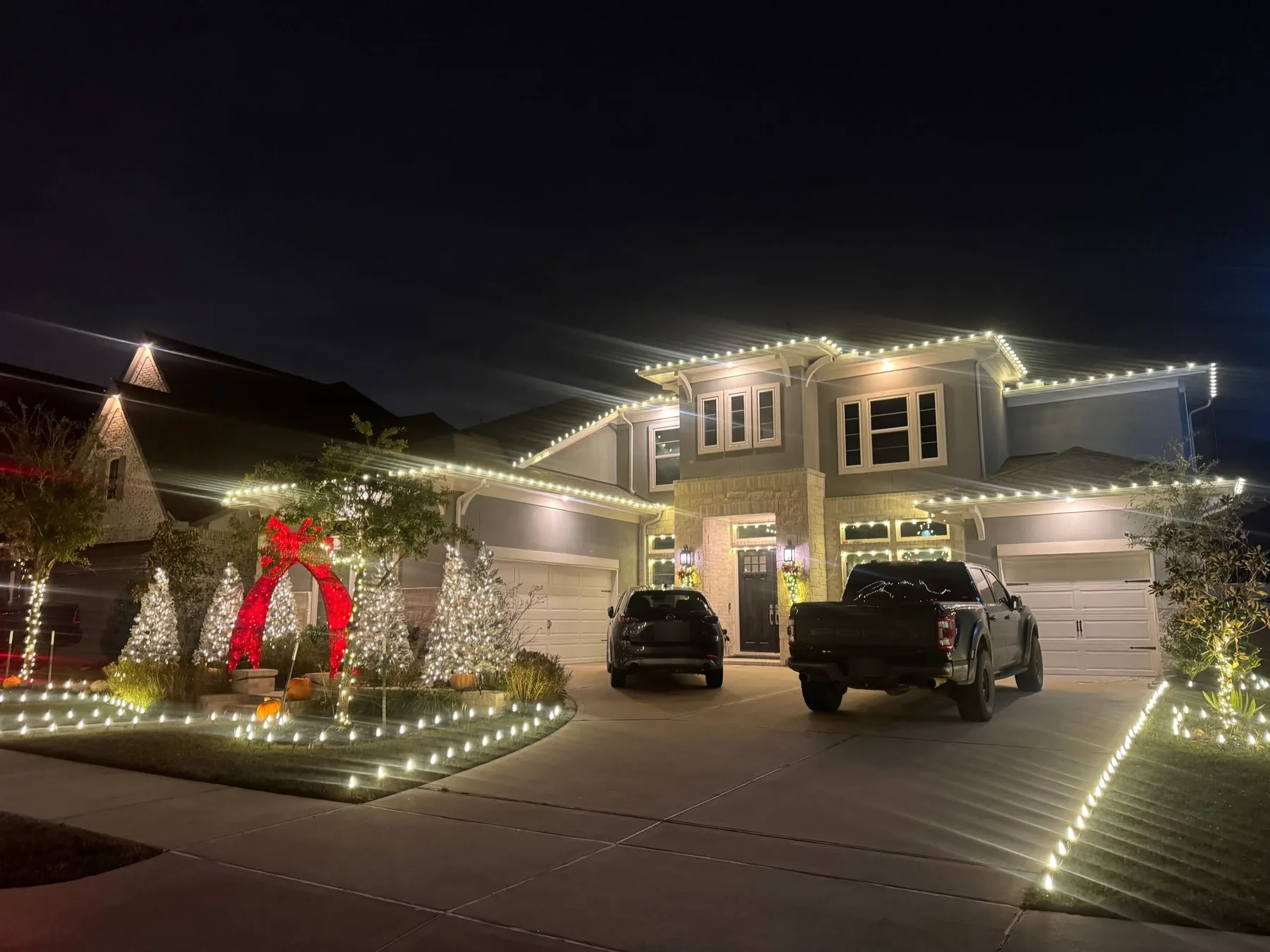
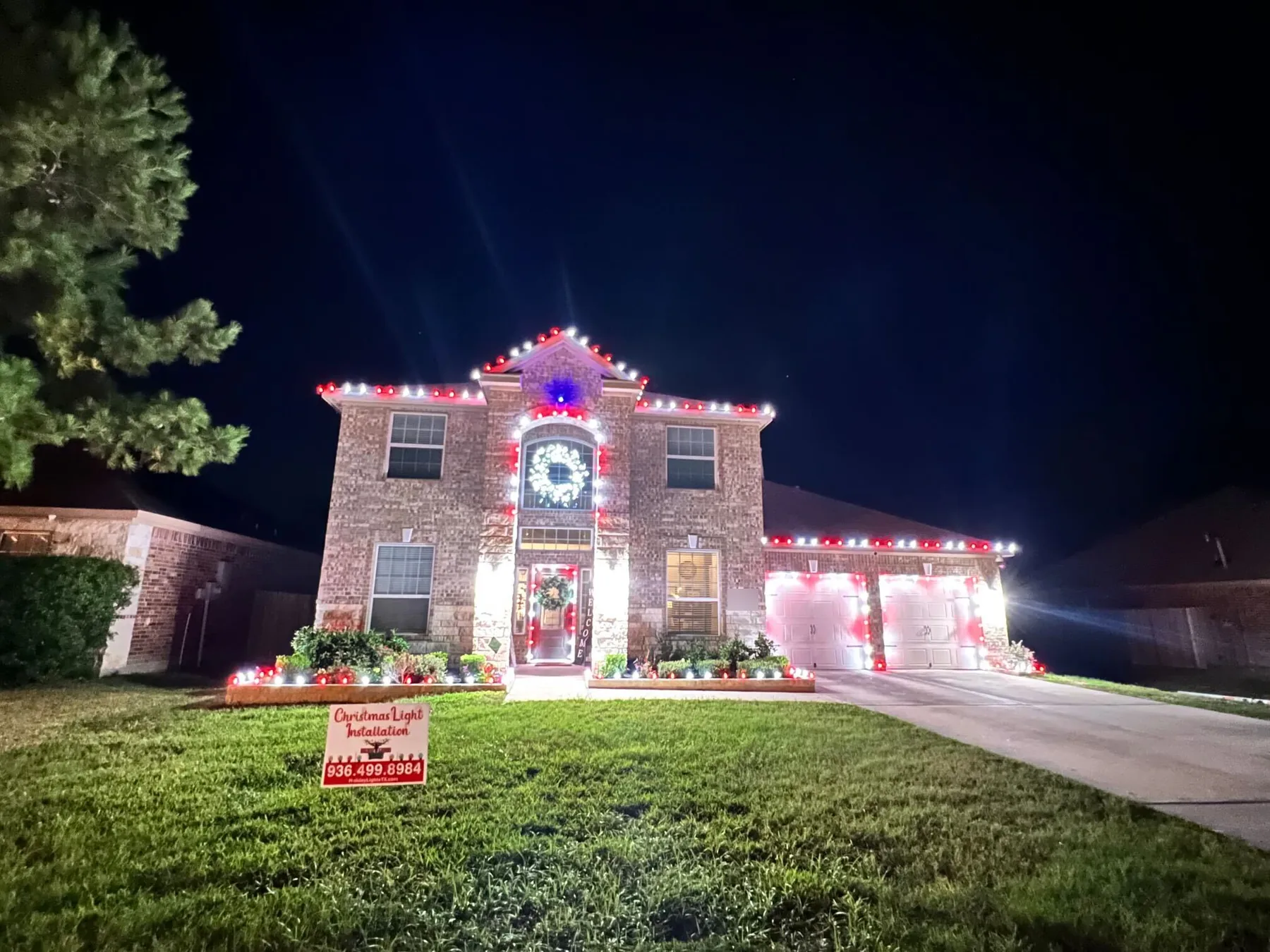
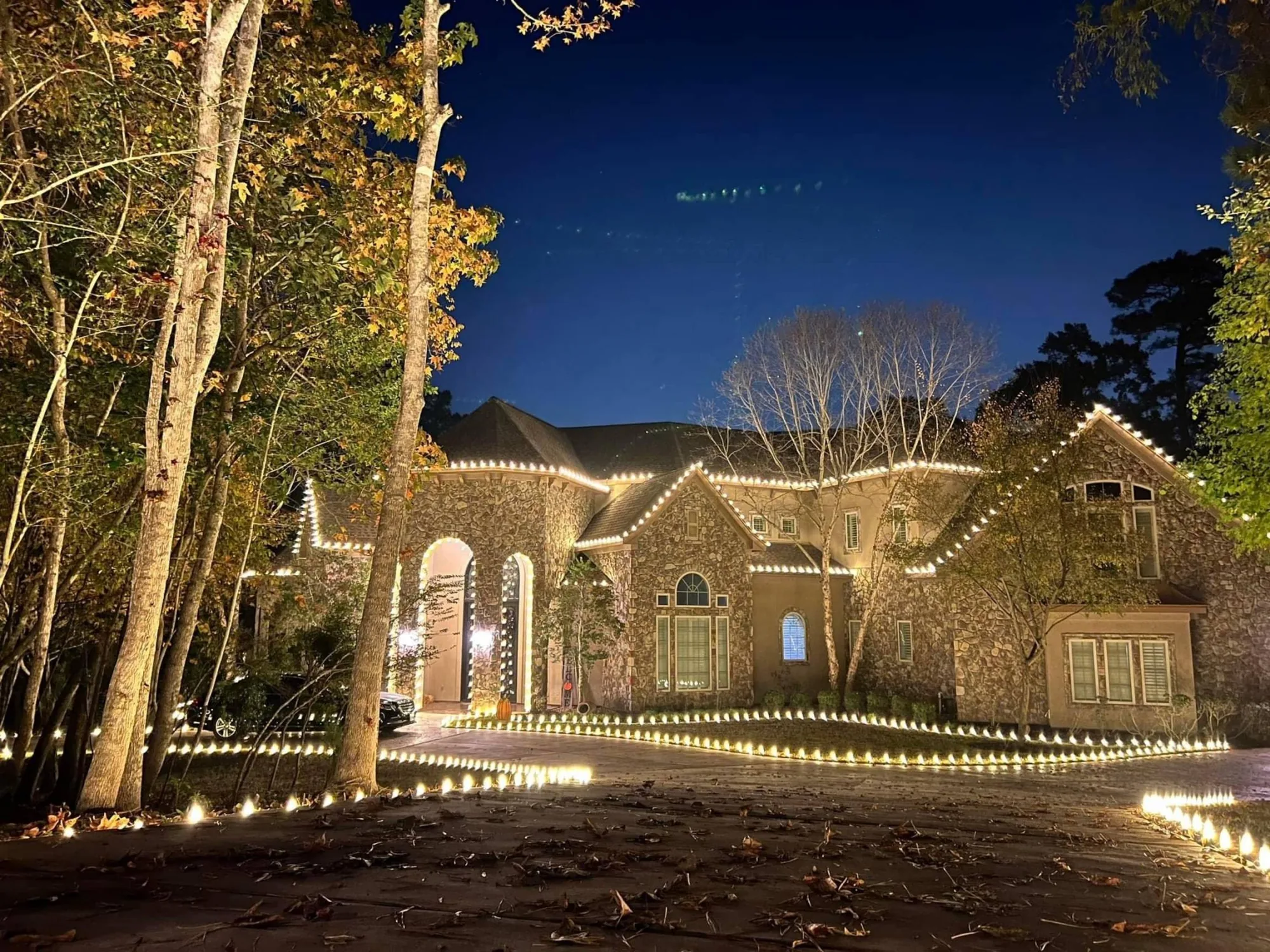
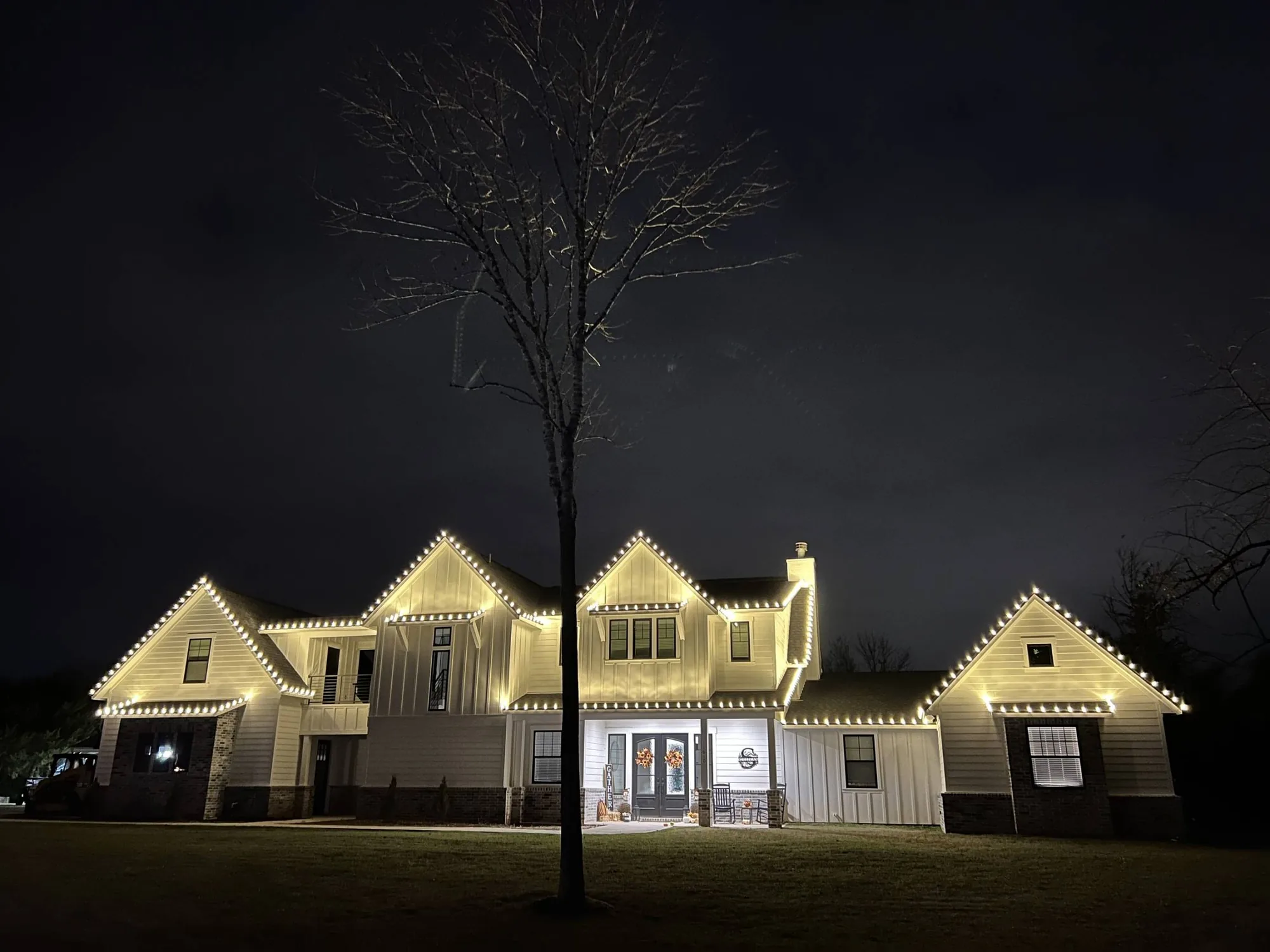
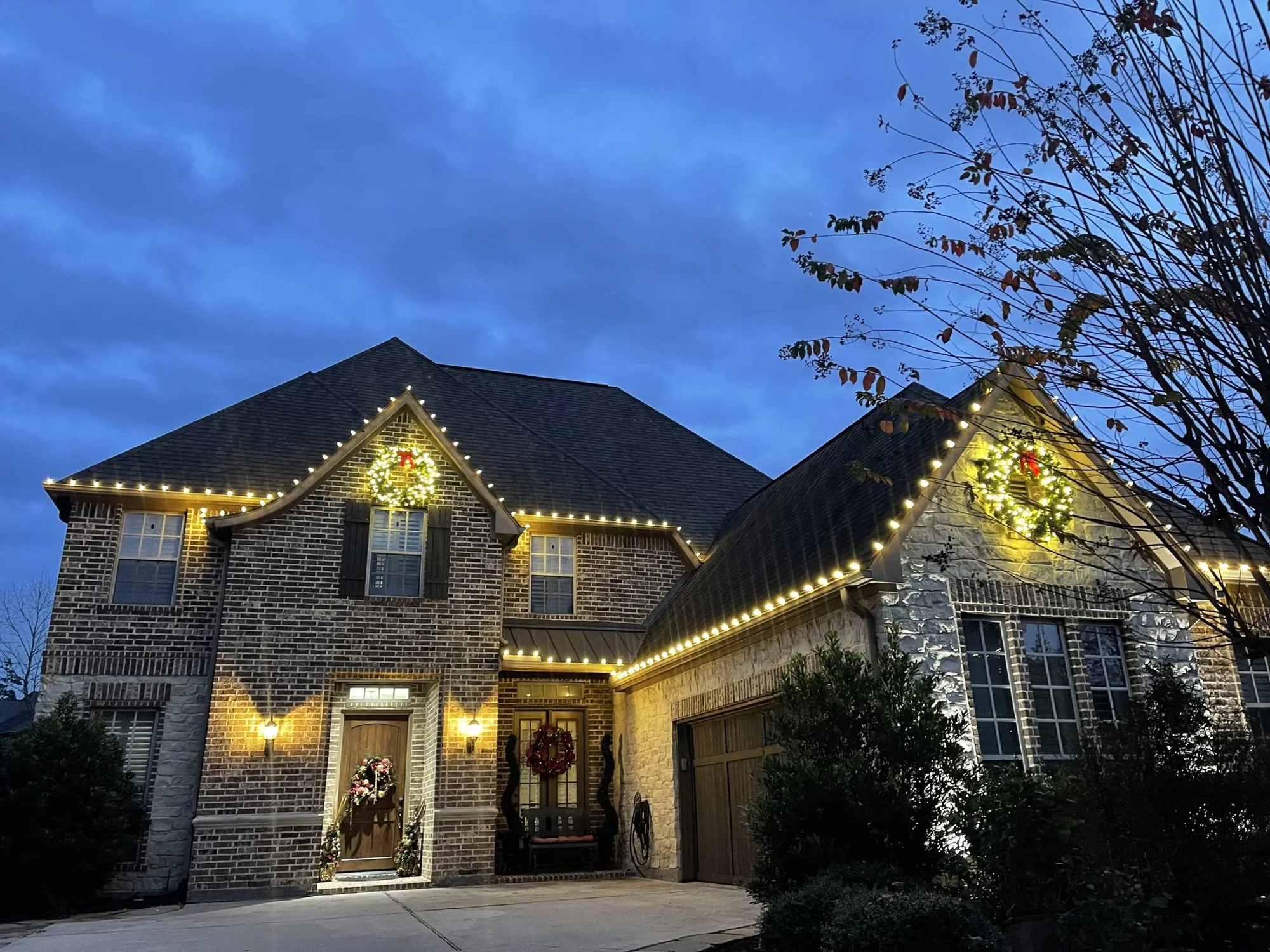
A professional job is custom-cut: the strand is measured against your house and cut to length before it goes up, with bulb spacing set so corners still read as one continuous line and wire managed so nothing dangles below the drip edge. That is the difference people notice from the street without being able to say why.
At Holiday Lights Texas the lighting is commercial-grade, weather-rated LED, which is not product you can buy at a big-box store. Installation is included, a timer is configured, in-season maintenance is free, and if something goes dark we answer within 24 hours, seven days a week. Takedown and off-season storage are included too, and the lights stay with us rather than with you.
That last point is easy to miss. You are not buying a product. You are buying a finished display that someone else keeps working and puts away.
A fair side-by-side
Put the same house through both columns and the picture is clearer. Our roofline rates are $6, $8 and $10 per linear foot by height, ground lighting is $5 per foot, and the minimum package is $799, all including removal and storage.
A simple single-story ranch with a short roofline is the case where DIY is most competitive on cost, and some owners enjoy it. A two-story house with gables, a ridge and a couple of trees is where the professional price usually wins once you count your own time, a second ladder and replacement lights next year.
- Cost up front: DIY is lower in dollars, professional is a single all-in price
- Time: DIY is hours to days each way, professional is a single visit for most single-family homes
- Result: custom-cut and even versus fixed lengths and visible joins
- If a section fails: DIY is yours to fix, professional is free and answered within 24 hours
- January: DIY is your problem, professional includes removal and storage
When DIY makes sense, and when it does not
DIY is a reasonable choice for a low single-story roofline you can reach from the ground or a short ladder, a budget that really is tight, and an owner who likes the ritual. Keep it simple, use outdoor-rated product, plug into a GFCI-protected outlet, and never work alone on a ladder.
Hire a professional when the roof is two stories, steep or has several planes, when you want trees wrapped, when you would rather not spend a weekend on it, or when you want the display to look designed rather than assembled. You can also mix the two: some customers have us do the roofline and trees and add small decorations themselves.
If you are unsure, ask for a quote. It is free, it comes back within 24 hours and usually the same business day, and it tells you exactly what the professional option costs. The cost guide shows how that number is built.
A checklist if you decide to do it yourself
If you choose DIY, a little planning prevents most of the pain. Measure the roofline first so you buy the right amount, and buy outdoor-rated strands rather than indoor ones. Plan where each run starts and ends, and where it plugs in, before the first clip goes on. Run lights from a GFCI-protected outdoor outlet, keep connections off the ground where water collects, and never run a cord through a closed door or window.
Safety is the part to take seriously. Use a ladder rated for the job on firm, level ground, have a second person footing it, and stay off wet or icy surfaces. If the roofline is two stories, steep, or only reachable from a roof, that is the point to stop and get a quote. The saving is not worth a fall.
Finally, plan your takedown on the day you install. Choose how you will wind and label each run and where the box will live. The strands you store carefully are the ones that work next year, and the ones you stuff into a bin are the ones you will buy again.
- Measure first, then buy outdoor-rated product
- Plan start, end and power for every run
- Plug into a GFCI-protected outlet
- Keep connections off the ground and out of standing water
- Work with a second person and a properly rated ladder
- Plan takedown and storage before you install
A middle path: professional for the hard parts
You do not have to choose all or nothing. Many homeowners have us handle the parts that are hard and risky, such as the second-story rooflines, the ridge and the tall trees, and then add small touches themselves, such as a wreath on the door or a string on a porch rail. Everything we install is custom cut and maintained for the season, so the difficult work stays dependable while you keep the part you enjoy.
If you would like to see what the professional piece would cost before deciding, the cost estimator gives a range in a few minutes and a quote follows within 24 hours.
Questions people ask
In dollars spent up front, usually yes. Once you add your time, ladder risk, replacement strands each year and the work of takedown and storage, the gap narrows and often reverses on larger or two-story houses.
No. Our crews are trained to work on residential roofs without damaging shingles, flashing or gutters, and the clips we use are chosen for that purpose. We are insured.
No. Once the design is agreed our crew can install while you are at work, and the same is true for takedown.
By the Holiday Lights Texas team, a family owned holiday lighting company based in Conroe, Texas. Published October 19, 2026, updated October 19, 2026. Every figure and policy referenced here is one the company publishes and honours on real properties. Where the company has not published a policy, this guide says so rather than guessing.
More in CostAll resources