Start with the arrival, not every surface
Luxury properties often have more visible space than a standard front-yard display can comfortably fill. The answer is not to cover every roof edge or tree; it is to decide what a guest sees first from the road or at the gate.
A long approach can carry the eye toward the house, while the main roofline or entry provides the destination. That sequence makes the property feel considered and keeps the display from turning into a collection of separate ideas.
- Gate or monument as the first welcome
- Driveway edge or selected trees to guide the approach
- Main facade as the primary nighttime focal point
Make the roofline the architectural frame
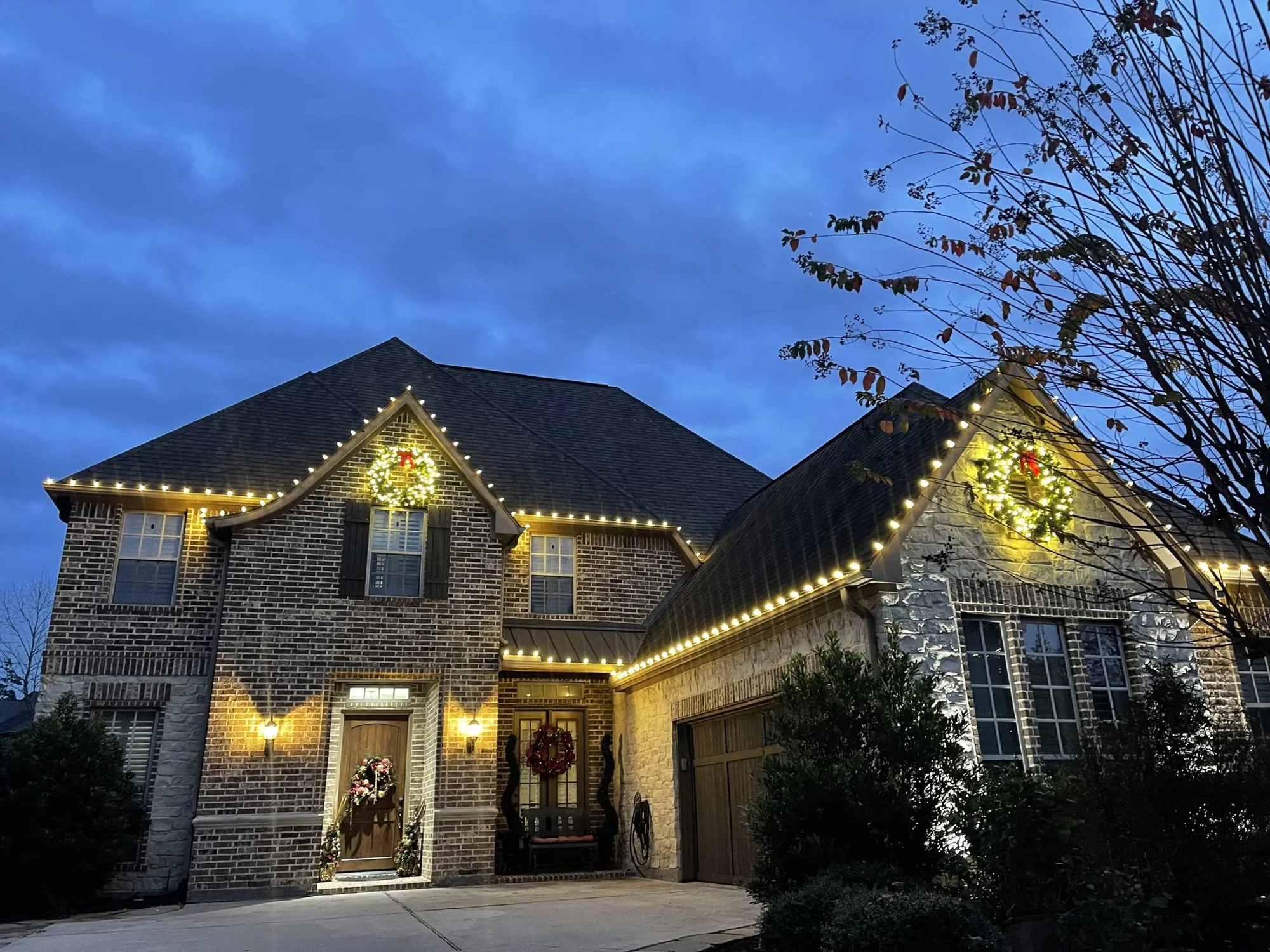
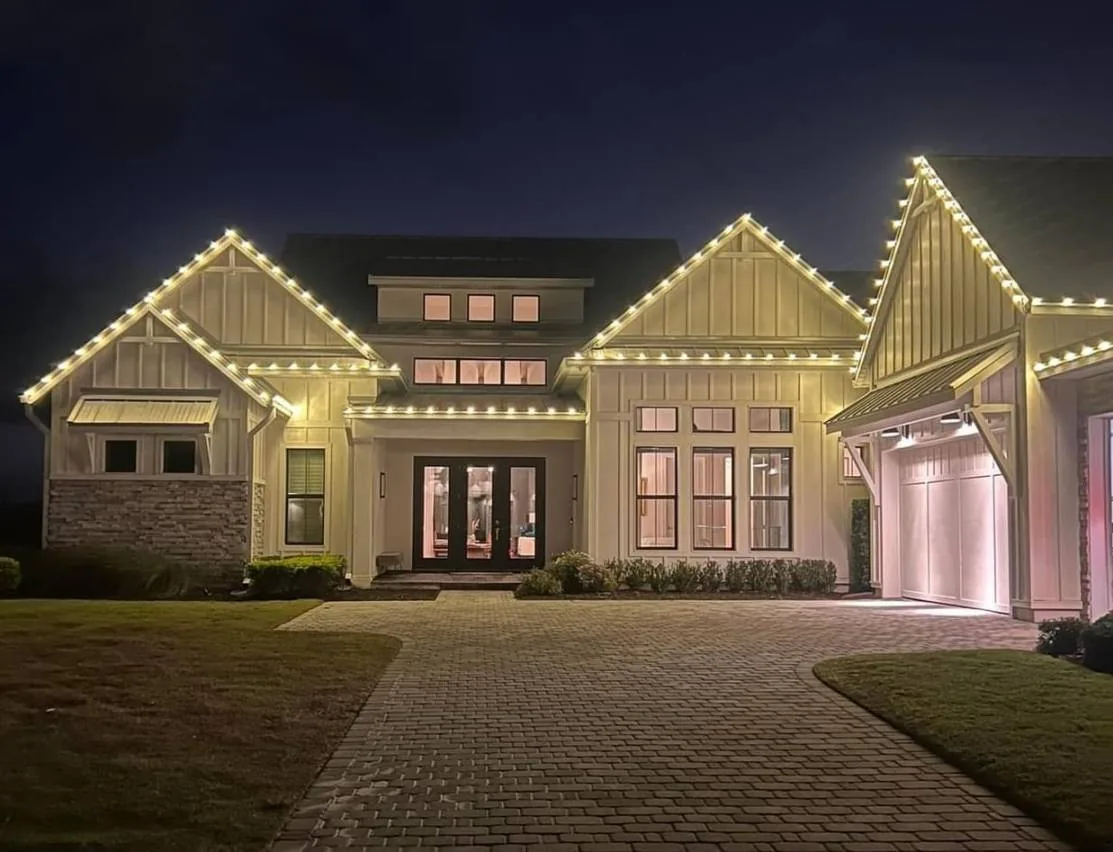
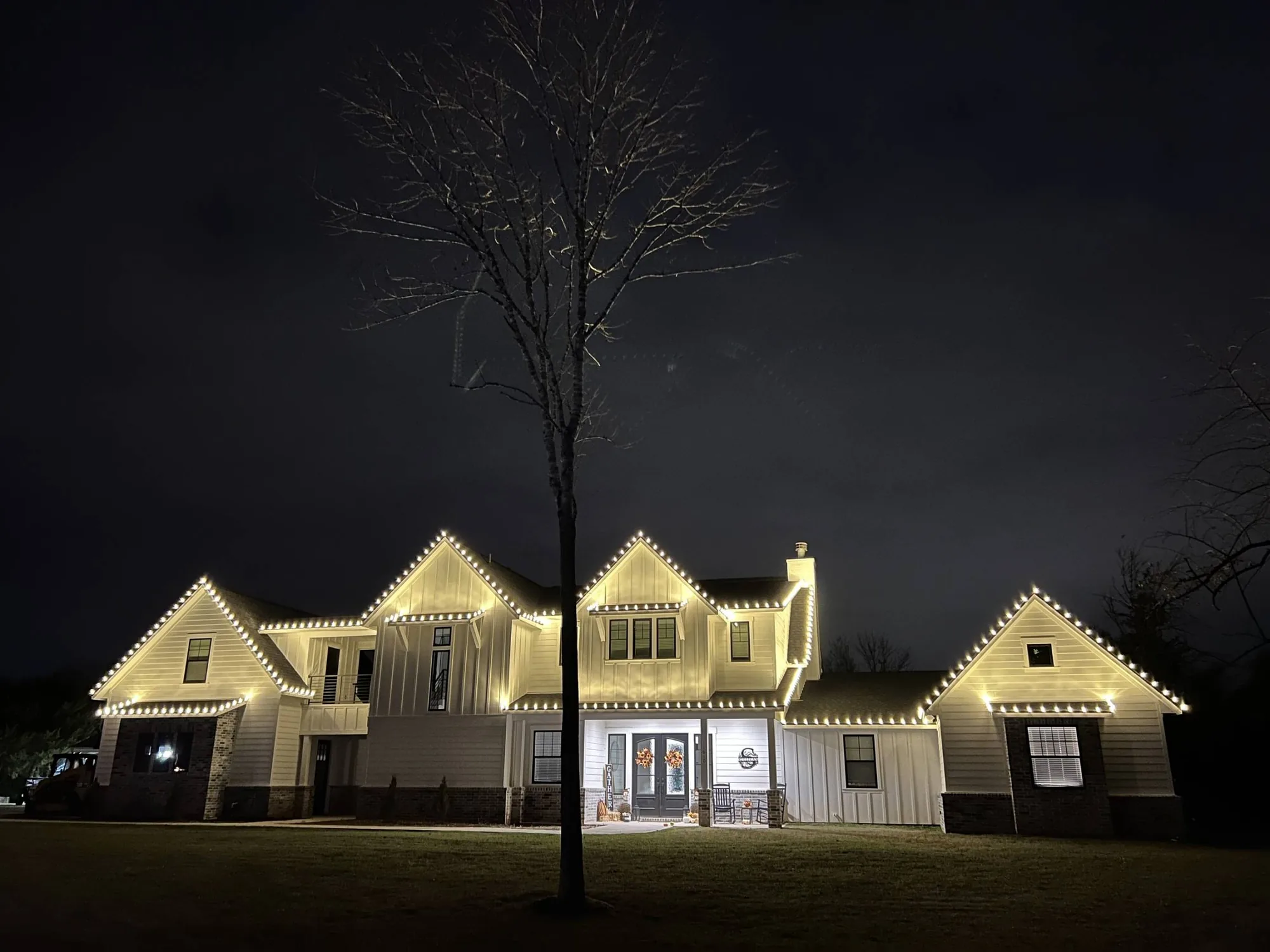
A well-defined roofline is the anchor for many luxury home displays. Multiple gables, high ridges, porte cocheres, and detached garages can look impressive when the key lines are traced with a consistent color and spacing.
Not every roof section needs the same level of emphasis. The front-facing architecture earns the strongest treatment, while a secondary wing can be quieter so the home keeps its natural hierarchy.
Use mature trees with restraint and purpose
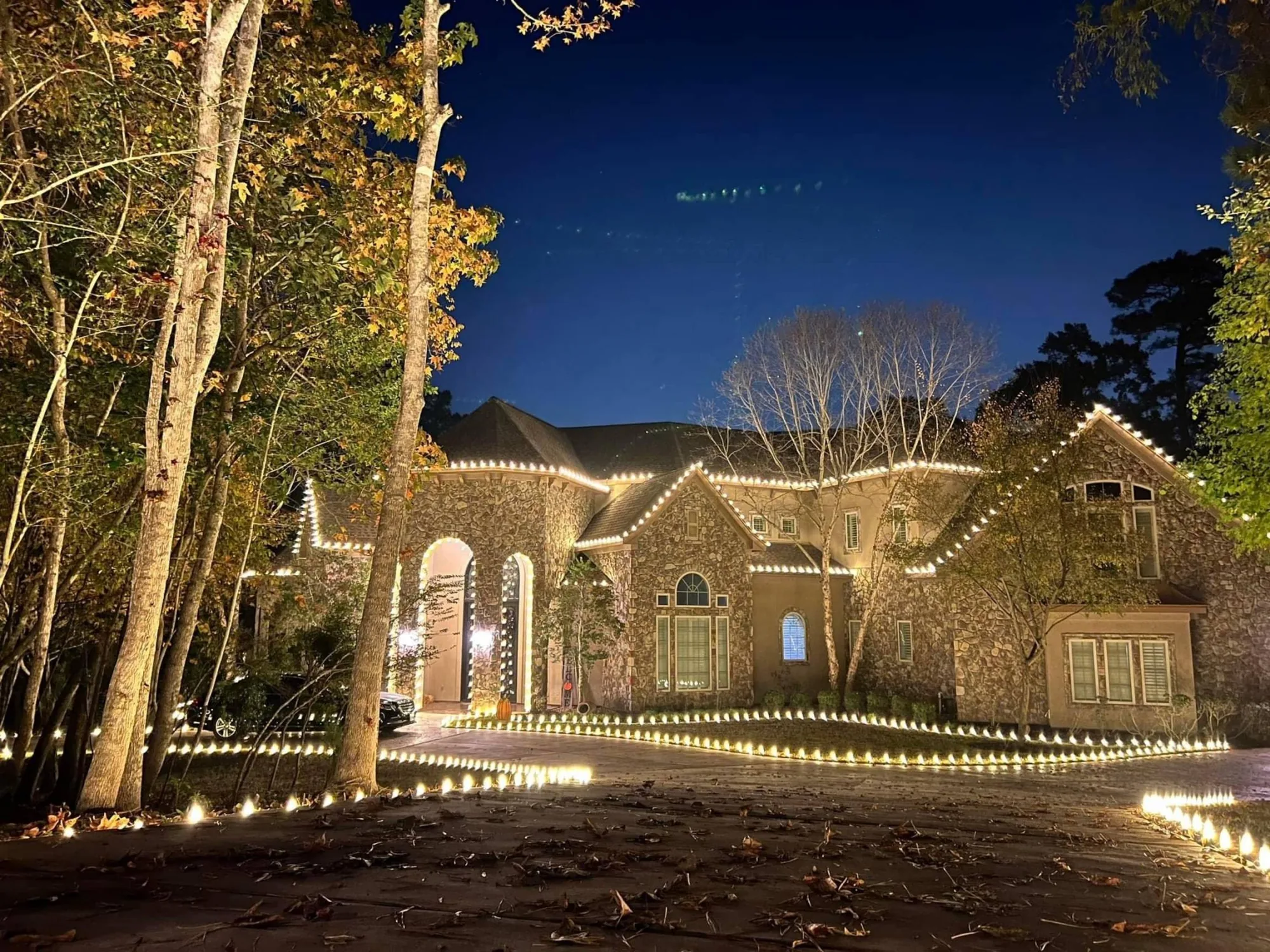
Large oaks and other mature trees can give an estate-scale property its character after dark. Trunk wraps, selected branch wraps, or canopy lighting can work well when the tree is close enough to the arrival path or facade to feel connected to the plan.
A single well-lit tree can have more impact than several lightly decorated ones. Preserve dark areas between features so the eye can recognize the size of the lot and the shape of the landscape.
- Feature the tree that frames the entry or driveway
- Use consistent white light to connect trees with the architecture
- Avoid treating every tree as a separate display
- Keep access and safe working conditions part of the plan
Give the entry a reason to be noticed
The front door, covered porch, and formal entry are where guests experience the display up close. Wreaths and garland can provide texture and color there without interrupting the clean roofline view from the street.
For a gated property, the same idea can apply to a gatehouse or monument. A simple, balanced treatment at the entry says more than a crowded collection of décor.
Choose a restrained color plan
Warm white is a frequent fit for stone, brick, and traditional exterior materials because it adds a calm, classic glow. Bright white can suit a more contemporary facade, especially when the home has crisp roof geometry and darker trim.
A red accent at a wreath or entry can add a holiday note without taking over the property. Keep the main architectural light color consistent from the first approach through the main facade, then let greenery and a few accents do the rest.
Plan the full property around a realistic scope
A large property can be phased by visual priority. Begin with the areas that make the strongest impression, then add the driveway, trees, beds, or a secondary structure only when they strengthen the overall view.
Holiday Lights Texas publishes full-property displays in the $3,000+ budget band, while the actual scope is set by the property and design. One all-inclusive price covers the season, including design, custom-cut commercial-grade LED lighting, installation, free maintenance, removal, and storage.
A plan can be grand without being crowded. Give the strongest features room to be seen, use darkness as a visual break between them, and let the approach tell the story before the entry comes into view.
For an estate, this measured approach helps the display remain handsome from several viewpoints: the road, the drive, the front walk, and the windows inside the home. Each lighted area should earn its place in that wider view. That restraint allows a large display to feel deliberate, impressive, and appropriate to the home from every approach and in photographs, rather than merely busy.
- Primary facade and roofline first
- Entry, gate, or driveway as the next visual layer
- Trees and landscape beds only where they support the approach
- A timer configured for the hours you want the display to run
Designing at the scale of an estate
Large homes are designed in layers. The main house sets the outline, a garage or guest structure adds a secondary mass, and the entry drive, gate and landscaping create the approach. Each layer needs its own role, and the whole should read as one composition from the street and from the drive.
At this scale the biggest risk is inconsistency. A single color temperature, a consistent bulb size on each type of line and an even spacing rhythm keep a large display looking calm instead of cluttered. Custom cutting makes that possible across long runs.
Architecture-led choices
Stone and brick facades reward warm white, which flatters the texture and avoids a cold, clinical look. Stucco and painted exteriors can carry crisper white or a restrained color accent. Dark façades often look best with a clean white line that gives the house a defined edge against the night sky.
Tall, steep roofs deserve attention to the ridge and the gable peaks, because those lines are what people see first from a distance. Where a roof has multiple intersecting planes, tracing each one gives the house depth.
Long drives, gates and landscape
Properties with long driveways have an opportunity most houses do not: an approach. Lighting the drive edge and wrapping a line of trees creates a sequence that builds toward the house. Gates and entry columns can carry the first note of the display.
These elements also need the most careful planning for power and protection. Long runs, outdoor outlets and weather exposure are all considered during the site visit, and gates and long drives are reviewed with a designer before final pricing.
What the process looks like for an estate
Large properties are scoped on site rather than from a photo. We walk the property, measure, discuss the design and give you a clear quote. The install may take longer than a typical home, and your quote tells you the expected duration.
The same terms apply as for any customer: free in-season maintenance, removal and off-season storage, and an annual reinstall that is already fitted to your property. See the annual reinstall for how the second year goes.
Details that separate refined from busy
At the top end, restraint is the signature. A single, warm color, perfectly even lines, trees that are wrapped consistently from trunk to canopy and a clear focal point at the entry read as expensive, while a mix of colors and elements reads as crowded.
Symmetry helps on formal facades. Mirror the lighting on either side of the entry, and keep the lines clean at the corners. On asymmetric or modern homes, follow the lines of the architecture instead of imposing symmetry.
Finally, think about the view from inside. A large home is lived in as well as looked at, and window frames, a lit courtyard or a wrapped tree seen from the dining room add to the experience of the people who live there.
Getting started
If you are considering a display for a larger property, call (936) 499-8984 or use the contact page and tell us about it. A site visit is the best way to scope the project, and we will review gates, long drives, detached structures and large trees with a designer before final pricing.
Planning a quiet standout
The most memorable large-home displays are rarely the loudest. They are the ones where every line is clean, every tree is wrapped to the same standard and the whole property feels as though it was lit by a single hand. That consistency comes from planning the property as a whole before the first strand is cut, and from a team that installs, maintains and stores the set year after year, so the result gets better, not messier, over time.
By the Holiday Lights Texas team, a family owned holiday lighting company based in Conroe, Texas. Published September 15, 2026, updated October 1, 2026. Every figure and policy referenced here is one the company publishes and honours on real properties. Where the company has not published a policy, this guide says so rather than guessing.
More in DesignAll resources